An interdisciplinary program that builds strong mathematical foundations while training you to model real-world systems and analyze data, preparing you for careers across finance, technology, research, engineering, and beyond.

An interdisciplinary program that builds strong mathematical foundations while training you to model real-world systems and analyze data, preparing you for careers across finance, technology, research, engineering, and beyond.
Programme level
Study duration
Cost per year
Study language
Mathematics, Modeling and Data Analytics (MMDA) is the follow-up program of Mathematics
Mathematics is at the foundation of science, ranging from the beauty of theory and pure thought to applications in almost all areas of the natural sciences, engineering, economics, finance, and even the social sciences. While Mathematics is an ancient subject, and its applications also date back to many centuries, recent advances of the last two decades in Data Science have revolutionized all these applications as well as some areas of mathematics itself.
A key advantage of this interdisciplinary, English-taught program is that it equips students both with mathematical tools for formulating and analyzing problems as well as context provided in modeling real-world problems and algorithmic data-driven approaches towards solving them. The strong mathematical foundation sought for in the program equips students with more powerful methods of analysis and modeling problems serves as a wide source of mathematical questions.
The undergraduate program at Constructor University is a three-year, 180-credit-point program designed to prepare students for a wide range of career paths.
The “4C Model” is the program's backbone, with disciplinary content grouped into three themes according to study years: CHOICE-CORE-CAREER. Additionally, the “CONSTRUCTOR Track”, an integral part of the program, runs parallel throughout the program. It provides students with multidisciplinary content and essential skills such as argumentation, data visualization, societal engagement, and communication.
The curriculum allows students to tailor their education to their goals and to explore different fields of study, with the flexibility to change their major within the first year. Moreover, the programs include a mandatory internship and a study-abroad opportunity in the fifth semester to provide students with hands-on experience and a global perspective.
Year 1
The first study year is characterized by a university-specific offering of disciplinary education that builds on and expands upon the students’ entrance qualifications. Students select introductory modules for a total of 45 CP from the CHOICE area of a variety of study programs, of which 15-45 CP will belong to their intended major.
To pursue an MMDA major, the following CHOICE modules (30 CP) need to be taken as mandatory modules during the first year of study:
The remaining CHOICE module (15 CP) can be selected according to interest and/or with the aim of allowing a change of major.
Analysis and Linear Algebra cover the foundations of the areas of calculus and linear algebra from a rigorous mathematical perspective. In addition, the modules Mathematical Modelling and Scientific Programming with Python provide the foundation for mathematical modeling and basic programming skills. These CHOICE modules are complemented by the Methods modules (Matrix Algebra and Advanced Calculus I + II) which equip students with complementary skills in calculus and linear algebra.
Year 2
In their second year, students take a total of 45 CP from a selection of in-depth, discipline-specific CORE modules. Building on the introductory CHOICE modules and applying the methods acquired so far, these modules aim to expand the students’ critical understanding of the key theories, principles, and methods in their major for the current state of knowledge and best practice.
To pursue Mathematics, Modeling and Data Analytics as a major, 40 CP mandatory CORE modules need to be acquired:
Students complement their studies by taking 5 ECTS of the second/third year Specialization modules:
Year 3
During their third year, students prepare and make decisions for their career after graduation. To explore available choices, and to gain professional experience, students take a mandatory summer internship. The third year of studies allows Mathematics, Modeling and Data Analytics students to take specialization modules within their discipline, but also focuses on the responsibility of students beyond their discipline.
The 5th semester also opens a mobility window for ample study abroad options. Finally, the 6th semester is dedicated to fostering the research experience of students by involving them in a Bachelor thesis project.
To pursue Mathematics as a major, students take all in all 20 CP from mandatory elective Specialization modules:
The following modules from Physics and Data Science and master's program in CSSE can substitute up to 5 CP of the above Specialization modules:
As a core element of Constructor University’s employability approach students are required to engage in a mandatory two-month internship of 15 CP that will usually be completed during the summer between the second and third year of study. This gives students the opportunity to gain first-hand practical experience in a professional environment, apply their knowledge and understanding to a professional context, reflect on the relevance of their major in employment and society, reflect on their own role in employment and society, and find professional orientation. As an alternative to the full-time internship, students interested in setting up their own company can apply for a start-up option to focus on the development of their business plan.
The CONSTRUCTOR Track is another important feature of Constructor University’s educational model. The Constructor Track runs orthogonal to the disciplinary CHOICE, CORE, and CAREER modules across all study years and is an integral part of all undergraduate study programs. It provides an intellectual tool kit for lifelong learning and encourages the use of diverse methodologies to approach cross-disciplinary problems. The CONSTRUCTOR track contains Methods, New Skills and German Language and Humanities modules.
Methods
Methods and skills such as mathematics, statistics, programming, data handling, presentation skills, academic writing, and scientific and experimental skills are offered to all students as part of the Methods area in their curriculum. The modules that are specifically assigned to each study programs equip students with transferable academic skills. They convey and practice specific methods that are indispensable for each students’ chosen study program. Students are required to take 20 CP in the Methods area. The size of all Methods modules is 5 CP.
To pursue MMDA as a major, the following Methods modules (20 CP) need to be taken as mandatory modules:
New Skills Modules
This part of the curriculum constitutes an intellectual and conceptual tool kit that cultivates the capacity for a particular set of intellectual dispositions including curiosity, imagination, critical thought, and transferability. It nurtures a range of individual and societal capacities, such as self-reflection, argumentation and communication. Finally, it introduces students to the normative aspects of inquiry and research, including the norms governing sourcing, sharing, withholding materials and research results as well as others governing the responsibilities of expertise as well as the professional point of view. Students in this study program are required to take the following modules in their second and third year:
Furthermore, they must choose either
as well one of the following modules:
German Language and Humanities Modules
German language abilities foster students’ intercultural awareness and enhance their employability in their host country. They are also beneficial for securing mandatory internships (between the 2nd and 3rd year) in German companies and academic institutions. Constructor University supports its students in acquiring basic as well as advanced German skills in the first year of the Constructor Track. Non-native speakers of German are encouraged to take 2 German modules (2.5 CP each), but are not obliged to do so. Native speakers and other students not taking advantage of this offering take alternative modules in Humanities in each of the first two semesters.
A degree in Mathematics, Modeling and Data Analytics opens the door for a wide range of career options. These include:
All applicants must show an adequate command of the English language to enroll at Constructor University. An applicant’s English language ability (non-native speakers) may be demonstrated through language proficiency test scores.
You will qualify for an English proficiency waiver if you:
are a native English speaker OR
have been instructed exclusively in English for a minimum of 6 years OR
have scored 600 or higher on the Evidence-Based Reading and Writing section OR
have scored 9 or higher on the ACT Writing section
English Language proficiency tests accepted by Constructor University and the minimum scores/grades:
• TOEFL (Paper-based): Minimum Score: 575
• TOEFL (Internet-based): Minimum Score: 90
• MELAB (Michigan Test): Minimum Score: 80
• IELTS (British Council): Minimum Score: 6.5
• GCSE (British General Certificate of Secondary Education): Minimum Score: A or B
• Cambridge Certificate of Proficiency in English (CPE): Minimum Score: A, B, C and C1 pass
• Cambridge Certificate in Advanced English (CAE): Minimum Score: A, B, C
• Cambridge First Certificate in English (FCE – extended): Minimum Score: A
• International Baccalaureate English A Lit / Lang & Lit: Minimum Score: 6, 7
• SAT Evidence-Based Reading & Writing: Minimum Score: 600
• ACT Writing: Minimum Score: 9
• Duolingo English Test: Minimum Score: 110
• Pearson PTE Academic: Minimum Score: 58
Bremen
Constructor University
BSc Mathematics, Modeling and Data Analytics
Computer Science, Artificial Intelligence & Data Science
Bachelor
English
IELTS: 6.5
TOEFL: 90
36 months / 6 semesters
01 Feb 2027
| Study mode | Workload | Duration | Cost per year | Total cost |
|---|---|---|---|---|
 On-campus
|
Full-time | 36 months | 23,256$ | 69,767$ |

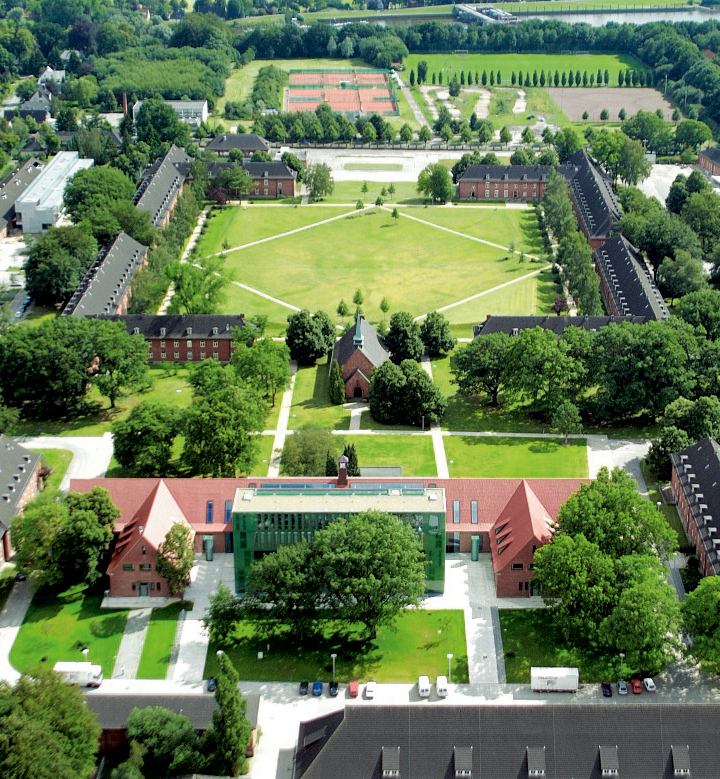
A truly global institution offering world-class, English-taught programs in science, technology, business, and social sciences. Located in Bremen, it unites students from over 110 countries on a vibrant campus where innovation, research, and cultural diversity thrive — preparing graduates to become future-ready leaders in a rapidly changing world.

 Germany

 Level:
Bachelor
Level:
Bachelor
 Language:
English, German
Language:
English, German
 Duration:
36 months
Duration:
36 months
 Cost per year:
6,781$
Cost per year:
6,781$
 Next admission:
31 Aug 2027
Next admission:
31 Aug 2027
 Location:
 Online
 Germany
Level:
Bachelor
Language:
English
Duration:
36 months
Cost per year:
7,294$
Next admission:
01 Oct 2026
Location:
On-campus
Germany
Level:
Master
Language:
English
Duration:
24 months
Cost per year:
9,169$
Next admission:
01 Oct 2026
Location:
On-campus
Germany
Level:
Bachelor
Language:
English, German
Duration:
36 months
Cost per year:
6,781$
Next admission:
31 Aug 2027
Location:
Online
Germany
Level:
Bachelor
Language:
English, German
Duration:
36 months
Cost per year:
6,781$
Next admission:
31 Aug 2027
Location:
Online
Germany
Level:
Bachelor
Language:
English
Duration:
36 months
Cost per year:
7,294$
Next admission:
01 Oct 2026
Location:
On-campus
Germany
Level:
Master
Language:
English
Duration:
24 months
Cost per year:
9,169$
Next admission:
01 Oct 2026
Location:
On-campus
Germany
Level:
Bachelor
Language:
English, German
Duration:
36 months
Cost per year:
6,781$
Next admission:
31 Aug 2027
Location:
Online
Germany
Level:
Bachelor
Language:
English, German
Duration:
36 months
Cost per year:
6,781$
Next admission:
31 Aug 2027
Location:
Online
 Germany
Level:
Master
Language:
English
Duration:
12 months
Cost per year:
19,186$
Next admission:
28 Sep 2026
Location:
On-campus
Germany
Level:
Master
Language:
English
Duration:
12 months
Cost per year:
19,186$
Next admission:
28 Sep 2026
Location:
On-campus
Please enter your details to connect with a PKHUB Advisor
 Whatsapp