Develop advanced skills in AI through hands-on projects and research. This programme equips you to design, implement, and manage AI solutions, preparing you for innovation and leadership across diverse industries.

Develop advanced skills in AI through hands-on projects and research. This programme equips you to design, implement, and manage AI solutions, preparing you for innovation and leadership across diverse industries.
Programme level
Study duration
Cost per year
Study language
The Master's programme in Artificial Intelligence (AI) at our SRH University focuses on preparing students with the necessary knowledge and skills to develop, implement and evaluate advanced AI technologies. The programme objectives focus on teaching theoretical knowledge, practical skills and innovative thinking to prepare students for a successful career in this dynamic and fast-growing field.
Our course goals
Expanding specialist knowledge in artificial intelligence
Development of practical skills
Promote innovation and creativity
Preparation for leadership roles
Strengthening analytical and critical thinking skills
Promoting professional and ethical responsibility
Global thinking and intercultural competence
The demand for specialists in the field of artificial intelligence has risen significantly worldwide. Companies and organisations are increasingly looking for experts who can develop, implement and apply AI technologies. AI experts are finding employment opportunities in a variety of industries, including healthcare, finance, automotive, e-commerce, education, computer science and many others. AI is used in various applications such as robotics, computer vision, natural language processing (NLP), data science and machine learning. Due to the high demand for AI experts, competition for qualified professionals is strong.
At the beginning of your Master's degree programme in Information Technology - Artificial Intelligence, you will learn about the theories of information transmission and compression, among other things, and deal with basic principles and techniques for transmitting signals in wired and wireless networks. You will acquire in-depth knowledge in the fields of digital signal processing, image processing and machine learning.
In the further course of your Master's degree programme, you will deepen your knowledge in the field of artificial intelligence. In the Deep Neural Networks module, you will familiarise yourself with a powerful machine learning technique and expand your programming skills in Python Programming. As part of your internship, you can gain practical experience and apply your theoretical knowledge before writing your Master's thesis.
1st semester
2nd semester
3rd semester
4th semester
To apply for the Master’s programme in Information Technology - Artificial Intelligence, you will need to provide
English language requirements:
Accepted English Proficiency Certificates (valid within 2 years), with at least the indicated score:
Heidelberg
SRH University
M.Eng. in Information Technology of Artificial Intelligence
Computer Science, Artificial Intelligence & Data Science
Master
English
IELTS: 6.5
TOEFL: 87
24 months / 4 semesters
01 Oct 2026
| Study mode | Workload | Duration | Cost per year | Total cost |
|---|---|---|---|---|
 On-campus
|
Full-time | 24 months | 15,000$ | 30,000$ |


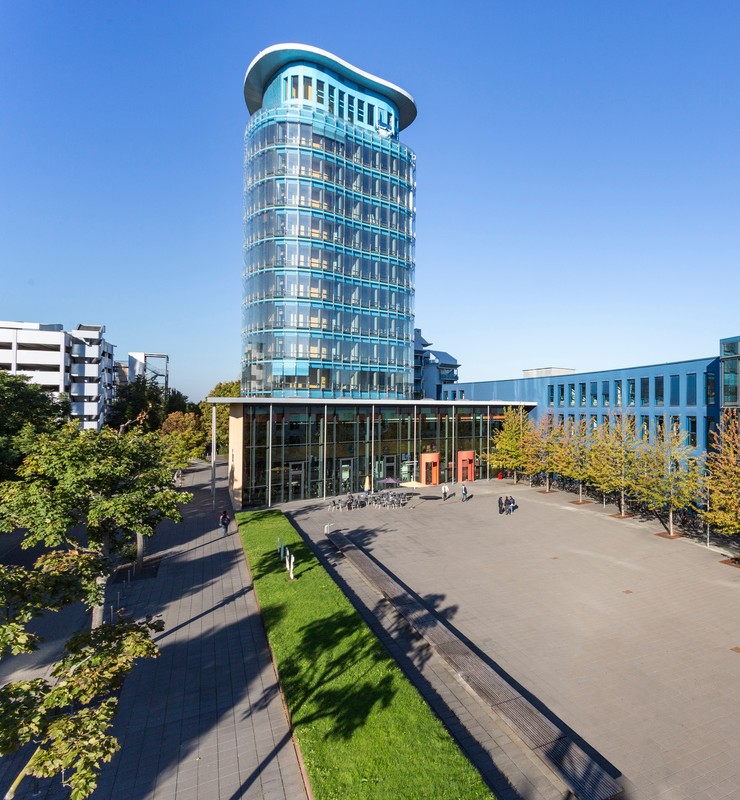
A leading private university in Germany known for its innovative teaching model, international focus, and strong industry connections—SRH University empowers students to gain practical experience, global perspectives, and career-ready skills in the heart of Berlin.

 Germany

 Level:
Bachelor
Level:
Bachelor
 Language:
English, German
Language:
English, German
 Duration:
36 months
Duration:
36 months
 Cost per year:
6,781$
Cost per year:
6,781$
 Next admission:
31 Aug 2027
Next admission:
31 Aug 2027
 Location:
 Online
 Germany
Level:
Bachelor
Language:
English
Duration:
36 months
Cost per year:
7,294$
Next admission:
01 Oct 2026
Location:
On-campus
Germany
Level:
Master
Language:
English
Duration:
24 months
Cost per year:
9,169$
Next admission:
01 Oct 2026
Location:
On-campus
Germany
Level:
Bachelor
Language:
English, German
Duration:
36 months
Cost per year:
6,781$
Next admission:
31 Aug 2027
Location:
Online
Germany
Level:
Bachelor
Language:
English, German
Duration:
36 months
Cost per year:
6,781$
Next admission:
31 Aug 2027
Location:
Online
Germany
Level:
Bachelor
Language:
English
Duration:
36 months
Cost per year:
7,294$
Next admission:
01 Oct 2026
Location:
On-campus
Germany
Level:
Master
Language:
English
Duration:
24 months
Cost per year:
9,169$
Next admission:
01 Oct 2026
Location:
On-campus
Germany
Level:
Bachelor
Language:
English, German
Duration:
36 months
Cost per year:
6,781$
Next admission:
31 Aug 2027
Location:
Online
Germany
Level:
Bachelor
Language:
English, German
Duration:
36 months
Cost per year:
6,781$
Next admission:
31 Aug 2027
Location:
Online
 Germany
Level:
Master
Language:
English
Duration:
12 months
Cost per year:
19,186$
Next admission:
28 Sep 2026
Location:
On-campus
Germany
Level:
Master
Language:
English
Duration:
12 months
Cost per year:
19,186$
Next admission:
28 Sep 2026
Location:
On-campus
Please enter your details to connect with a PKHUB Advisor
 Whatsapp