Bachelor of Computer Science – Cybersecurity Specialization

Constructor University

Gain hands-on experience in protecting digital systems and preventing cyber threats through industry-led training and real-world projects. Learn from cybersecurity professionals and build the skills to launch a global career in one of the world’s fastest-growing tech fields.

Apply Now

Bachelor

Programme level

36 months

Study duration

23,256$

Cost per year

English

Study language

Programme info

The Cybersecurity specialization* of the BSc in Computer Science aims to equip students with the fundamental skills and knowledge necessary to pursue a career in cybersecurity, enabling them to take on junior roles in various domains of security operations, application security, awareness training, and governance. By the end of this specialization, graduates will be prepared to enter the industry with a solid understanding of security principles, hands-on experience with cybersecurity technologies, and an awareness of compliance and regulatory frameworks.


The specialization in Cybersecurity has been developed in cooperation with professionals from leading cybersecurity and cyberprotection companies, and part of the modules are taught by long-standing industry experts. Kevin Reed, an experienced Chief Information Security Officer and MBA graduate from Kingston University, leads the Cybersecurity specialization, bringing a hands-on approach to risk mitigation, DevSecOps, and agile security practices.

The undergraduate program at Constructor University is a three-year, 180-credit-point program designed to prepare students for a wide range of career paths.


The “4C Model” is the program's backbone, with disciplinary content grouped into three themes according to study years: CHOICE-CORE-CAREER. Additionally, the “CONSTRUCTOR Track”, an integral part of the program, runs parallel throughout the program. It provides students with multidisciplinary content and essential skills such as argumentation, data visualization, societal engagement, and communication.


The curriculum allows students to tailor their education to their goals and to explore different fields of study, with the flexibility to change their major within the first year. Moreover, the programs include a mandatory internship and a study-abroad opportunity in the fifth semester to provide students with hands-on experience and a global perspective.

Year 1

The first study year is characterized by a broad offer in disciplinary education that builds on and extends the students’ entrance qualification. CS Students select introductory modules with a total of 45 CP from the CHOICE area of a variety of study programs, of which 15-45 CP will belong to their intended major.


To pursue Computer Science as a major, the following CHOICE modules (30 CP) need to be taken as mandatory (m) modules:

  • CHOICE Module: Programming in C and C++ (m, 7.5 CP)
  • CHOICE Module: Algorithms and Data Structures (m, 7.5 CP)
  • CHOICE Module: Mathematical Foundations of Computer Science (m, 7.5 CP)
  • CHOICE Module: Digital Systems and Computer Architecture (m, 7.5 CP)


The first two modules, Programming in C and C++ and Algorithms and Data Structures, introduce students to imperative and object-oriented programming and basic algorithms and data structures. The Mathematical Foundations of Computer Science module covers mathematical concepts like boolean algebra, propositional and predicate logic, abstract algebra, and graph theory. Students learn to work with formal notations and how to construct proofs. Starting with elementary digital gates, the Digital Systems and Computer Architecture module develops an understanding of how the hardware components of a computer system work. Students learn programming at the machine instruction level.


The remaining CHOICE module (7.5) in the first semester can be selected according to interest and/or with the aim to obtain a minor or to allow a change of major up until the beginning of the second year. In the second semester, students continue the choice they took in the first semester towards a possible minor or major change, or they take Development in JVM Languages, which introduces students to object-oriented programming in languages running on the Java virtual machine.


Year 2

In their second year, students take a total of 45 CP from a selection of in-depth, discipline-specific CORE modules. Building on the introductory CHOICE modules and applying the methods and skills acquired so far, these modules aim to expand the students’ critical understanding of the key theories, principles, and methods in their major for the current state of knowledge and best practice.


CS students take 30 CP from the following CORE modules:

  • CORE Module: Databases (m, 7.5 CP)
  • CORE Module: Software Engineering (m, 7.5 CP)
  • CORE Module: Operating Systems (m, 7.5 CP)
  • CORE Module: Automata, Computability, and Complexity (m, 7.5 CP)


Students decide to complement their studies by taking the discipline-specific mandatory elective CORE modules (15 CP):

  • CORE Module: Functional Programming (me, 5 CP)
  • CORE Module: Legal and Ethical Aspects of Computer Science (me, 2.5 CP)
  • CORE Module: Machine Learning (me, 5 CP)
  • CORE Module: Academic Skills in Computer Science (me, 2.5 CP)


Or substitute these modules with CORE modules from a second field of studies with the aim to pursue a minor.


Year 3

Students prepare and make decisions for their career after graduation during their third year. In addition, students take a mandatory summer internship to explore available choices fitting individual interests and gain professional experience.


The 5th semester also opens a mobility window for comprehensive study-abroad options. Finally, the 6th semester is dedicated to fostering students' research experience by involving them in an extended Bachelor thesis project.


To pursue CS as a major, 15 CP from the following mandatory elective Specialization Modules need to be taken:

  • Computer Graphics (me, 5 CP)   
  • Image Processing (me, 5 CP)
  • Distributed Algorithms (me, 5 CP)
  • Web Application Development (me, 5 CP)
  • Computer Networks (me, 5 CP)
  • Secure and Dependable Systems (me, 5 CP) 
  • Computer Vision (me, 5 CP)
  • Human Computer Interaction (me, 5 CP)
  • Artificial Intelligence (me, 5 CP)
  • Robotics (me, 5 CP)
  • Machine Learning (me, 5 CP)
  • Digital Design (me, 5 CP)
  • Information Theory (me, 5 CP)
  • Functional Programming (me, 5 CP)
  • Parallel and Distributed Computing (me, 5 CP)


Internship / Start-up and career skills module

As part of Constructor University's commitment to student employability, all students are required to participate in a mandatory two-month internship of 15 CP that will usually be completed during the summer between the second and third year of study. It provides students with the opportunity to gain real-world experience in a professional setting, allowing them to apply their knowledge and understanding to a professional context, reflect on the relevance of their major to employment and society, and gain professional guidance. As an alternative to the full-time internship, students interested in setting up their own company can apply for a start-up option to focus on the development of their business plan.


The CONSTRUCTOR Track

The CONSTRUCTOR Track is another important feature of Constructor University’s educational model. The Constructor Track runs orthogonal to the disciplinary CHOICE, CORE, and CAREER modules across all study years and is an integral part of all undergraduate study programs. It provides an intellectual tool kit for lifelong learning and encourages the use of diverse methodologies to approach cross-disciplinary problems. The CONSTRUCTOR track contains Methods, New Skills and German Language and Humanities modules.


Methods

Methods and skills such as mathematics, statistics, programming, data handling, presentation skills, academic writing, and scientific and experimental skills are offered to all students as part of the Methods area in their curriculum. The modules that are specifically assigned to each study programs equip students with transferable academic skills. They convey and practice specific methods that are indispensable for each students’ chosen study program. Students are required to take 20 CP in the Methods area. The size of all Methods modules is 5 CP.


To pursue Computer Science as a major, the following Methods modules (20 CP) need to be taken as mandatory modules:

  • Methods Module: Calculus and Elements of Linear Algebra I (m, 5 CP)
  • Methods Module: Calculus and Elements of Linear Algebra II (m, 5 CP)
  • Methods Module: Probability and Random Processes (m, 5 CP)


Students who have a strong mathematical background can also choose Matrix Algebra & Advanced Calculus I and II (me, 5 CP each) instead of Calculus and Elements of Linear Algebra I and II.


For the remaining 5 CP CS students can choose between the Methods modules

  • Methods: Numerical Methods (me, 5 CP)


and the Mathematics, Modeling and Data Analytics CORE module:

  • CORE Module: Discrete Mathematics (me, 5 CP)


New Skills Modules

This part of the curriculum constitutes an intellectual and conceptual tool kit that cultivates the capacity for a particular set of intellectual dispositions including curiosity, imagination, critical thought, and transferability. It nurtures a range of individual and societal capacities, such as self-reflection, argumentation and communication. Finally, it introduces students to the normative aspects of inquiry and research, including the norms governing sourcing, sharing, withholding materials and research results as well as others governing the responsibilities of expertise as well as the professional point of view. Students in this study program are required to take the following modules in their second and third year:

  • New Skills Module: Logic (m, 2.5 CP)
  • New Skills Module: Causation and Correlation (m, 2.5 CP)
  • New Skills Module: Argumentation, Data Visualization and Communication (m, 5 CP)


Furthermore, they must choose either

  • New Skills Module: Linear Model/Matrices (me, 5 CP) or
  • New Skills Module: Complex Problem Solving (me, 5 CP)


as well one of the following modules:

  • New Skills Module: Agency, Leadership and Accountability (me, 5 CP) or
  • New Skills Module: Community Impact Project (me, 5 CP).


German Language and Humanities Modules

German language abilities foster students’ intercultural awareness and enhance their employability in their host country. They are also beneficial for securing mandatory internships (between the 2nd and 3rd year) in German companies and academic institutions. Constructor University supports its students in acquiring basic as well as advanced German skills in the first year of the Constructor Track. Non-native speakers of German are encouraged to take 2 German modules (2.5 CP each), but are not obliged to do so. Native speakers and other students not taking advantage of this offering take alternative modules in Humanities in each of the first two semesters.

1. Proof of Identity

A Copy of your passport


2. Transcripts / Report Cards

Undergraduate applicants who are currently attending high school are required to submit transcripts or report cards covering the last 2-3 years of their high school education, including grades 9, 10, 11, and, if available, grade 12 (semester 1) report card showing course registration and current grades.


Applicants who have already completed high school need to provide their high school diploma, final grades, and, if applicable, results from the university entrance examination in their respective country.


If you are applying as a transfer student, please also provide your most recent university transcript, completed transfer credit application form and course syllabus. This FAQ and the study program handbook should provide the information you need to complete the transfer credit application form.


If any of the documents are not issued in English or German, they must be accompanied by a translated copy in English or German, completed by a sworn translator.


3. CV and Educational History Form

Please use the CV to provide a comprehensive overview of your qualifications, achievements, and skills. Make sure your CV includes extracurricular and voluntary activities. In addition, complete the Educational History Form. This form requires you to provide a list of all the schools you have attended, including your current school, the language of instruction. Please include the name of the high school leaving certificate you will receive upon graduation. Please submit the CV and the Education History Form as one PDF file.


4. Proof of English Language Proficiency

All applicants must show an adequate command of the English language to enroll at Constructor University. An applicant’s English language ability (non-native speakers) may be demonstrated through language proficiency test scores.


You will qualify for an English proficiency waiver if you:

  • are a native English speaker OR
  • have been instructed exclusively in English for a minimum of 6 years OR
  • have scored 600 or higher on the Evidence-Based Reading and Writing section OR
  • have scored 9 or higher on the ACT Writing section


English Language proficiency tests accepted by Constructor University and the minimum scores/grades:

  • TOEFL (Paper-based): 575
  • TOEFL (Internet-based): 90
  • MELAB (Michigan Test): 80
  • IELTS (British Council): 6.5
  • GCSE (British General Certificate of Secondary Education): Grade A or B
  • Cambridge Certificate of Proficiency in English (CPE): Grade A, B, C or C1 pass
  • Cambridge Certificate in Advanced English (CAE): Grade A, B or C
  • Cambridge First Certificate in English (Extended Certification): Grade A
  • International Baccalaureate English A Literature & English A Language and Literature: 6 or 7
  • SAT Evidence-Based Reading and Writing (New SAT): 600
  • ACT Writing: 9
  • Duolingo English Test: 110
  • Pearson PTE Academic: 58


Please upload the proof of English proficiency as a PDF document. Please note that screenshots are not accepted.


5. Motivation Statement

At Constructor University, we believe in getting to know our applicants on a more personal level through a comprehensive essay. The essay should delve into your interests and motivation for choosing our university program. You can showcase your passions, highlight their alignment with our academic offerings, and demonstrate how you will contribute to the vibrant campus community at Constructor University.


6. Standardized Testing

Constructor University does not require SAT/ACT scores for admission evaluation. Applicants have the choice to submit their application without a standardized test.


However, if admitted, enrollment may require standardized testing if the high school diploma does not grant direct admission to a German university. Applications without standardized test scores will be assessed based on the personal essay, academic achievements, extracurricular activities, and overall presentation throughout the application process.


If conditional admission is granted, it is recommended to take the SAT/ACT before arrival, although on-campus testing options and complementary test preparation may be available for those who choose to take it later.


Students who have sat for SAT/ACT should submit their test as a PDF. Screenshots are not accepted.


7. Recommendation Letter

A recommendation letter is optional/upon request. This should ideally come from a school official, such as a teacher, career/guidance counselor, head of school or principal.


If you are in a possession of a recommendation letter and you would like to submit it, please upload it as part of your application. If you are not in a possession of a recommendation letter, make sure to include the name of your counselor in the designated area on the application portal.


One of the primary outcomes of this specialization is ensuring that students are employable in entry-level cybersecurity roles within organizations and companies that require security expertise. Graduates will be capable of working as Junior SOC (Security Operations Center) Analysts, assisting in the day-to-day monitoring of security events, responding to incidents, and performing basic analysis to identify potential threats under supervision. Their role will be crucial in the detection and mitigation of cyberattacks, as they will learn how to handle security alerts and use specialized tools for incident response.


Another possible career path for graduates is as a Junior Application Security Engineer, where they will engage in security analysis and penetration testing, particularly for web applications. They will develop an understanding of software vulnerabilities, learn how to assess applications for security weaknesses, and contribute to the design of more secure systems by applying best practices in application security.


For those interested in the human and educational aspects of cybersecurity, the specialization also prepares students for roles as Junior Security Awareness and Training Analysts. In this capacity, they will focus on developing security training programs to help employees recognize and prevent cyber threats. By promoting security best practices across an organization, they will play a vital role in strengthening an organization’s overall security posture by reducing human-related vulnerabilities.


Additionally, students will have the opportunity to work in governance and compliance, taking on responsibilities as Junior Cybersecurity Governance and Compliance Analysts. This role involves ensuring that an organization adheres to industry security standards and regulatory requirements. Graduates will learn how to conduct security audits, assist in risk assessments, and ensure that cybersecurity policies align with legal and industry-specific regulations. Their work will be essential for maintaining the integrity and security of sensitive information while meeting compliance obligations.

This study program is part of the School of Computer Science & Engineering.


The School of Computer Science and Engineering focuses on research and development in information, communication, and production technologies, intelligent and autonomous systems, as well as the flow of goods.


Key disciplines in the school include Mathematics, Computer Science, Robotics, and Electrical Engineering.

Programme campus:

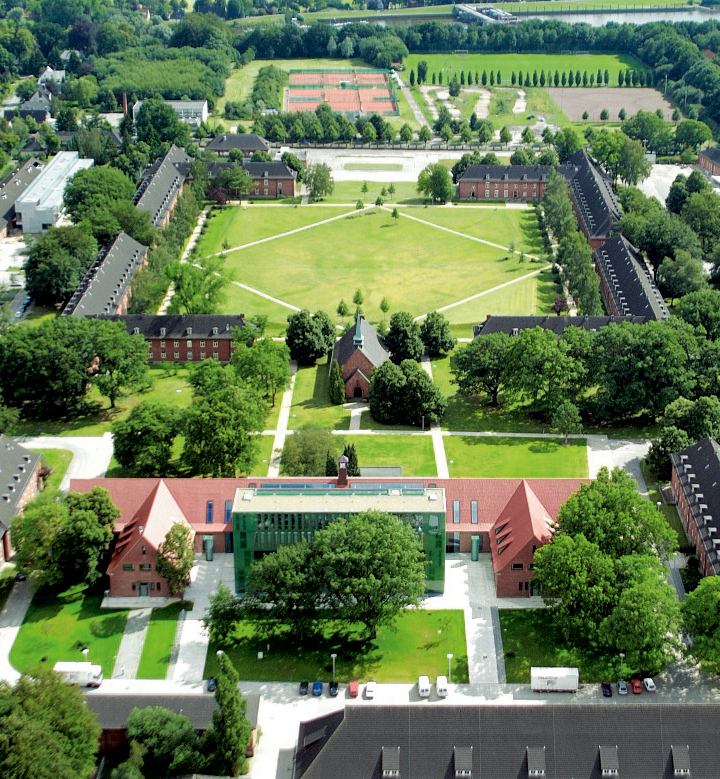
Bremen

University’s main campus:

Constructor University

Bremen, Germany

Programme name:

Bachelor of Computer Science – Cybersecurity Specialization

Field of study:

Computer Science, Cyber Security & Network Engineering

Programme level:

Bachelor

Programme language:

English

Language requirements:

IELTS: 6.5

TOEFL: 90

Duration & semesters:

36 months / 6 semesters

Next admission date:

01 Apr 2026

Programme pricing

Study mode Workload Duration Cost per year Total cost
On-campus Full-time 36 months 23,256$ 69,767$
Can’t deiced on a programme?
Contact us now and let our experienced counsellors guide you through your study journey.
Whatsapp

Similar programmes

Germany
Bachelor (BSc) Applied Artificial Intelligence
International University of Applied Sciences
Level: Bachelor
Language: English
Duration: 36 months
Cost per year: 6,101$
Next admission: 01 Apr 2026
Location:
Berlin
On-campus
Germany
Level: Master
Language: English
Duration: 24 months
Cost per year: 13,837$
Next admission: 01 Apr 2026
Location:
Heidelberg, Munich, Hamburg
On-campus
Germany
Level: Master
Language: English
Duration: 24 months
Cost per year: 10,988$
Next admission: 01 Apr 2026
Location:
Leipzig
On-campus
Germany
Bachelor (BSc) in Cyber Security
International University of Applied Sciences
Level: Bachelor
Language: English
Duration: 36 months
Cost per year: 6,101$
Next admission: 01 Apr 2026
Location:
Berlin
On-campus
Germany
Level: Master
Language: English
Duration: 24 months
Cost per year: 16,163$
Next admission: 01 Apr 2026
Location:
Heidelberg
On-campus
Germany
Master (MSc) Data Science
International University of Applied Sciences
Level: Master
Language: English
Duration: 24 months
Cost per year: 8,686$
Next admission: 01 Apr 2026
Location:
Berlin
On-campus
Start your study abroad journey today
Discover programmes worldwide or connect with our team for personalized support.
Find programme
© 2025 NEXT MOVE LLC. All rights reserved.