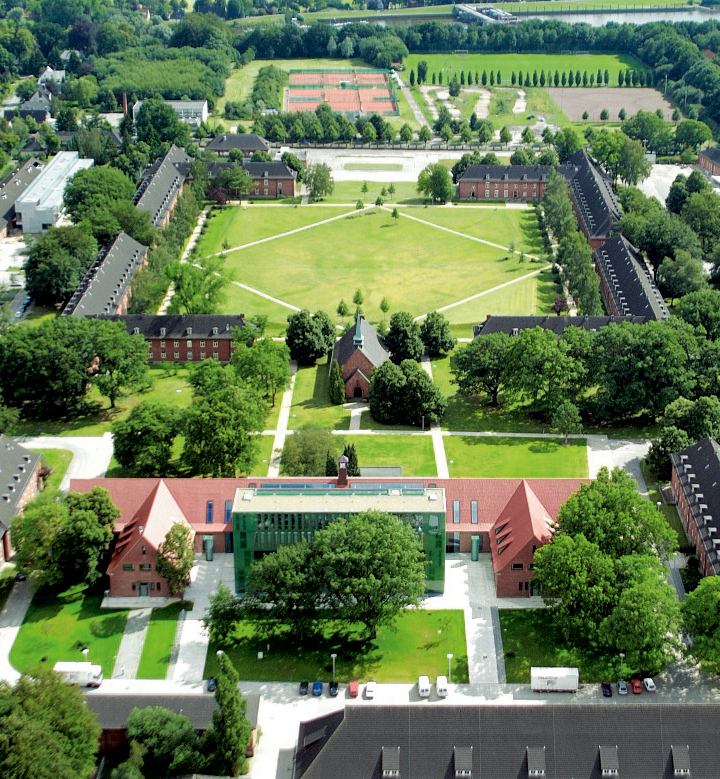
An interdisciplinary program that brings together medicinal chemistry and chemical biology to explore how drugs interact with the body—from molecules to whole systems—preparing you for innovative roles in the fast-growing pharmaceutical and biotechnology industries.
Programme level
Study duration
Cost per year
Study language
The global pharmaceutical industry requires well-trained scientists who have the education and ambition to drive innovative drug development. The English-taught Medicinal Chemistry and Chemical Biology (MCCB) program places the student at the forefront of those efforts by providing a fundamental understanding of the drug-body interaction from the molecular to the physiological level. By engaging this broader approach, that is, not only trying to cure disease (medicinal chemistry) but also placing an emphasis on the underlying associated cellular pathways (chemical biology), further innovative opportunities for treating disease will come forward. In this regard the MCCB program is unique within the German academic landscape and should help bridge the evolving needs of the high growth pharmaceutical industry.
The undergraduate program at Constructor University is a three-year, 180-credit-point program designed to prepare students for a wide range of career paths.
The “4C Model” is the program's backbone, with disciplinary content grouped into three themes according to study years: CHOICE-CORE-CAREER. Additionally, the “CONSTRUCTOR Track”, an integral part of the program, runs parallel throughout the program. It provides students with multidisciplinary content and essential skills such as argumentation, data visualization, societal engagement, and communication.
The curriculum allows students to tailor their education to their goals and to explore different fields of study, with the flexibility to change their major within the first year. Moreover, the programs include a mandatory internship and a study-abroad opportunity in the fifth semester to provide students with hands-on experience and a global perspective.
Year 1
The first study year is characterized by a university-specific offering of disciplinary education that builds on and expands upon the students’ entrance qualifications. Students select introductory modules for a total of 45 CP from the CHOICE area of a variety of study programs, of which 15-45 CP will belong to their intended major.
To pursue an MCCB major, the following CHOICE modules (30 CP) need to be taken as mandatory modules (m) during the first year of study:
Year 2
In their second year, students take a total of 45 CP from a selection of in-depth, discipline-specific CORE modules. These modules aim to expand students’ critical understanding of the key theories, principles, and methods in their major for the current state of knowledge and best practice.
To pursue the MCCB as a major, the following mandatory CORE modules (30 CP) must be taken:
Students can decide to either complement their studies by taking the following mandatory elective (me) CORE modules (15 CP) within MCCB:
or they may substitute these modules with CORE modules from a second field of study according to interest and/or with the aim to pursue a minor.
Year 3
During their third year, students prepare and make decisions for their career after graduation. To explore available choices fitting individual interests, and to gain professional experience, students take a mandatory summer internship.
The 5th semester opens also a mobility window for ample study abroad options. Finally, the 6th semester is dedicated to fostering the research experience of students by involving them in an extended Bachelor thesis project.
To pursue MCCB as a major, at least 10 of the 15 CP from the following major-specific Specialization Modules need to be taken:
A maximum of 5 CP can be taken from major-related modules instead of major-specific Specialization Modules:
Students may also select 15 CP entirely from their major-specific Specialization Modules.
As a core element of Constructor University’s employability approach students are required to engage in a mandatory two-month internship of 15 CP that will usually be completed during the summer between the second and third year of study. This gives students the opportunity to gain first-hand practical experience in a professional environment, apply their knowledge and understanding to a professional context, reflect on the relevance of their major in employment and society, reflect on their own role in employment and society, and find professional orientation. As an alternative to the full-time internship, students interested in setting up their own company can apply for a start-up option to focus on the development of their business plan.
The CONSTRUCTOR Track is another important feature of Constructor University’s educational model. The Constructor Track runs orthogonal to the disciplinary CHOICE, CORE, and CAREER modules across all study years and is an integral part of all undergraduate study programs. It provides an intellectual tool kit for lifelong learning and encourages the use of diverse methodologies to approach cross-disciplinary problems. The CONSTRUCTOR track contains Methods, New Skills and German Language and Humanities modules.
Methods
Methods and skills such as mathematics, statistics, programming, data handling, presentation skills, academic writing, and scientific and experimental skills are offered to all students as part of the Methods area in their curriculum. The modules that are specifically assigned to each study programs equip students with transferable academic skills. They convey and practice specific methods that are indispensable for each students’ chosen study program. Students are required to take 20 CP in the Methods area. The size of all Methods modules is 5 CP.
To pursue MCCB as a major, the following Methods modules (20 CP) need to be taken as mandatory modules:
New Skills Modules
This part of the curriculum constitutes an intellectual and conceptual tool kit that cultivates the capacity for a particular set of intellectual dispositions including curiosity, imagination, critical thought, and transferability. It nurtures a range of individual and societal capacities, such as self-reflection, argumentation and communication. Finally, it introduces students to the normative aspects of inquiry and research, including the norms governing sourcing, sharing, withholding materials and research results as well as others governing the responsibilities of expertise as well as the professional point of view. Students in this study program are required to take the following modules in their second and third year:
Furthermore, they must choose either
as well one of the following modules:
German Language and Humanities Modules
German language abilities foster students’ intercultural awareness and enhance their employability in their host country. They are also beneficial for securing mandatory internships (between the 2nd and 3rd year) in German companies and academic institutions. Constructor University supports its students in acquiring basic as well as advanced German skills in the first year of the Constructor Track. Non-native speakers of German are encouraged to take 2 German modules (2.5 CP each), but are not obliged to do so. Native speakers and other students not taking advantage of this offering take alternative modules in Humanities in each of the first two semesters.
Students who have completed the MCCB program will understand how the life of cells, organisms, and humans is organized at the chemical molecular level. This opens the door to graduate education (most often in biochemistry, medicinal chemistry, or organic chemistry) but also to a wide variety of career choices ranging from the strictly scientific (entry level industrial positions in the chemical, pharmaceutical, biotechnology, or food industries) to education (elementary or high school), to regulatory affairs (analytical food testing laboratories, quality management, etc.) to legal counsel (patent attorney, licensing, etc.) to start-ups. The critical, goal-oriented, skills acquired from your in-depth analysis of chemical-biological problems may also be recognized by headhunters as transferable to non-scientific areas of employment. The mandatory MCCB summer internship, most often within the industrial research sector, is a professional growth experience that is invaluable for aiding students in their career making decision process.
All applicants must show an adequate command of the English language to enroll at Constructor University. An applicant’s English language ability (non-native speakers) may be demonstrated through language proficiency test scores.
You will qualify for an English proficiency waiver if you:
English Language proficiency tests accepted by Constructor University and the minimum scores/grades:
• TOEFL (Paper-based): Minimum Score: 575
• TOEFL (Internet-based): Minimum Score: 90
• MELAB (Michigan Test): Minimum Score: 80
• IELTS (British Council): Minimum Score: 6.5
• GCSE (British General Certificate of Secondary Education): Minimum Score: A or B
• Cambridge Certificate of Proficiency in English (CPE): Minimum Score: A, B, C and C1 pass
• Cambridge Certificate in Advanced English (CAE): Minimum Score: A, B, C
• Cambridge First Certificate in English (FCE – extended): Minimum Score: A
• International Baccalaureate English A Lit / Lang & Lit: Minimum Score: 6, 7
• SAT Evidence-Based Reading & Writing: Minimum Score: 600
• ACT Writing: Minimum Score: 9
• Duolingo English Test: Minimum Score: 110
• Pearson PTE Academic: Minimum Score: 58
Bremen
Constructor University
BSc Medicinal Chemistry and Chemical Biology
Bachelor
English
IELTS: 6.5
TOEFL: 90
36 months / 6 semesters
01 Apr 2026
| Study mode | Workload | Duration | Cost per year | Total cost |
|---|---|---|---|---|
|
|
Full-time | 36 months | 23,256$ | 69,767$ |