Programme level
Study duration
Cost per year
Study language
Chemistry and Biotechnology (CBT) is a transdisciplinary field that combines the scientific principles of chemistry and biology to solve real-world problems. The English-taught program focuses on the composition, structure, behavior, and transformations of elements, compounds, molecules, and ions and how they can be applied in biotechnology. The biotechnology component of the program teaches students how to use biocatalysts and biomolecules to create a more sustainable future, along with the principles of biorefining and the circular economy.
The study program includes organic, inorganic, analytical, and physical chemistry modules, as well as relevant mathematics, engineering, and industrial practice. By completing this program, students will gain a strong understanding of the molecular approach and the commercial importance of chemistry and biotechnology.
Graduates of the Chemistry and Biotechnology degree program will be equipped with the knowledge, research skills, and problem-solving abilities necessary for a successful career in chemistry and/or biotechnology and for pursuing advanced studies at the Master's or Ph.D. level.
The undergraduate program at Constructor University is a three-year, 180-credit-point program designed to prepare students for a wide range of career paths.
The “4C Model” is the program's backbone, with disciplinary content grouped into three themes according to study years: CHOICE-CORE-CAREER. Additionally, the “CONSTRUCTOR Track”, an integral part of the program, runs parallel throughout the program. It provides students with multidisciplinary content and essential skills such as argumentation, data visualization, societal engagement, and communication.
The curriculum allows students to tailor their education to their goals and to explore different fields of study, with the flexibility to change their major within the first year. Moreover, the programs include a mandatory internship and a study-abroad opportunity in the fifth semester to provide students with hands-on experience and a global perspective.
Year 1
The first study year is characterized by a university-specific offering of disciplinary education that builds on and expands upon the students’ entrance qualifications. Students select introductory modules for a total of 45 CP from the CHOICE area of a variety of study programs, of which 15-45 CP will belong to their intended major.
To pursue Chemistry and Biotechnology (CBT) as a major, the following CHOICE modules (30 CP) are mandatory (m):
Year 2
In their second year, students take with a total of 45 CP from a selection of in-depth, discipline-specific CORE modules. Building on the introductory CHOICE modules and applying the methods and skills acquired so far (see 2.3.1), these modules aim to expand the students’ critical understanding of the key theories, principles, and methods in their major for the current state of knowledge and best practice.
To pursue CBT as a major, the following 45 CP of CORE modules need to be taken:
For students pursuing a minor in another study program (see below) the modules Scientific Software and Databases and Advanced Biotechnology Lab can be replaced by modules of the minor study program. The module Advanced Biotechnology Lab has to be then taken in the third year as a specialization module.
Year 3
During their third year, students prepare and make decisions for their career after graduation. To explore available choices fitting individual interests, and to gain professional experience, students take a mandatory summer internship. The third year of studies allows CBT students to further sharpen their profile with a selection of discipline-specific, research-oriented specialization modules that can be combined to enhance their individual competences in the natural sciences, strategy development for novel research approaches or managerial capabilities. Furthermore, the third year also focuses on the responsibility of students beyond their discipline (see CONSTRUCTOR Track).
The fifth semester also opens a mobility window for a diverse range of study abroad options. Finally, the sixth semester is dedicated to fostering the students’ research experience by involving them in a Bachelor thesis project.
To pursue CBT as a major, at least 10 of the 17.5 CP from the following major-specific Specialization Modules need to be taken:
A maximum of 5 CP can be taken from major-related modules instead of major-specific Specialization Modules:
Students may also select 15 CP entirely from their major-specific Specialization Modules.
The CONSTRUCTOR Track is another important feature of Constructor University’s educational model. The Constructor Track runs orthogonal to the disciplinary CHOICE, CORE, and CAREER modules across all study years and is an integral part of all undergraduate study programs. It provides an intellectual tool kit for lifelong learning and encourages the use of diverse methodologies to approach cross-disciplinary problems. The CONSTRUCTOR track contains Methods, New Skills and German Language and Humanities modules.
Methods Modules
To pursue CBT as a major, the following Methods modules (20 CP) must be taken as mandatory modules:
The Module Plant Metabolism and Natural Products can be replaced with a CORE module from another study program in order to pursue a minor.
New Skills Modules
This part of the curriculum constitutes an intellectual and conceptual tool kit that cultivates the capacity for a particular set of intellectual dispositions including curiosity, imagination, critical thought, and transferability. It nurtures a range of individual and societal capacities, such as self-reflection, argumentation and communication. Finally, it introduces students to the normative aspects of inquiry and research, including the norms governing sourcing, sharing, withholding materials and research results as well as others governing the responsibilities of expertise as well as the professional point of view.
All students are required to take the following modules in their second year:
These modules will be offered with two different perspectives of which the students can choose. The module perspectives are independent modules which examine the topic from different point of views. Please see the module description for more details.
In the third year, students take three 5 CP modules that build upon previous modules in the track and are partially constituted by modules that are more closely linked to each student’s disciplinary field of study. The following module is mandatory for all students:
This module will also be offered with two different perspectives of which the students can choose.
In their fifth semester, students may choose between:
The sixth semester also contains the choice between two modules, namely:
Study with best employability and career perspectives in industry, research or to proceed further master and PhD studies:
Career opportunities for CBT students are diverse and abundant. In general, the combination of chemistry and biotechnology increases employability, since biotechnological applications in the chemical industry are increasingly important. Sustainability and environmental protection are topics of ever-increasing importance in society and industry. In research and development, career opportunities cover the areas of chemicals, pharmaceuticals, fuels, nanotechnology, materials, and energy to environmental monitoring and forensic science.
The educational concept of Constructor University aims at fostering employability which refers to skills, capacities, and competencies that transcend disciplinary knowledge and allow graduates to quickly adapt to professional contexts. Constructor University defines employability as encompassing; i.e. it focuses not only on technical skills and understanding but also on personal attributes, competencies, and qualities that enable students to become responsible members of their professional and academic fields as well as of the societies they live in.
All applicants must show an adequate command of the English language to enroll at Constructor University. An applicant’s English language ability (non-native speakers) may be demonstrated through language proficiency test scores.
You will qualify for an English proficiency waiver if you:
English Language proficiency tests accepted by Constructor University and the minimum scores/grades:
• TOEFL (Paper-based): Minimum Score: 575
• TOEFL (Internet-based): Minimum Score: 90
• MELAB (Michigan Test): Minimum Score: 80
• IELTS (British Council): Minimum Score: 6.5
• GCSE (British General Certificate of Secondary Education): Minimum Score: A or B
• Cambridge Certificate of Proficiency in English (CPE): Minimum Score: A, B, C and C1 pass
• Cambridge Certificate in Advanced English (CAE): Minimum Score: A, B, C
• Cambridge First Certificate in English (FCE – extended): Minimum Score: A
• International Baccalaureate English A Lit / Lang & Lit: Minimum Score: 6, 7
• SAT Evidence-Based Reading & Writing: Minimum Score: 600
• ACT Writing: Minimum Score: 9
• Duolingo English Test: Minimum Score: 110
• Pearson PTE Academic: Minimum Score: 58
The Constructor Chemistry Student Society is a dynamic community established by current and former Chemistry undergraduate students at Constructor University. This society aims to bring together individuals who share a passion for Chemistry and create a unified platform for them to connect and engage with each other.
Some of the key objectives of this society include:
Through its efforts, the Constructor Chemistry Student Society plays a crucial role in promoting the advancement of Chemistry at Constructor University and fostering a thriving community of learners.
As students of a German university, Constructor students have the unique privilege of being able to join Gesellschaft Deutscher Chemiker (GDCh), the German Society of Chemists. Membership in GDCh offers numerous benefits, including access to internships, scholarships, events, and other opportunities to further their academic and professional development.
Additionally, as members of GDCh, Constructor students are encouraged to participate in the monthly meetings of the society, held at the University of Bremen. These meetings provide a forum for members to connect with other individuals in their field, exchange ideas, and collaborate on projects.
Joining GDCh is a valuable opportunity for Constructor students who are looking to expand their network, enhance their education and career prospects, and stay connected with the latest developments in the field of Chemistry.
Bremen
Constructor University
BSc in Chemistry and Biotechnology
Bachelor
English
IELTS: 6.5
TOEFL: 90
36 months / 6 semesters
01 Feb 2027
| Study mode | Workload | Duration | Cost per year | Total cost |
|---|---|---|---|---|
 On-campus
|
Full-time | 36 months | 23,256$ | 69,767$ |

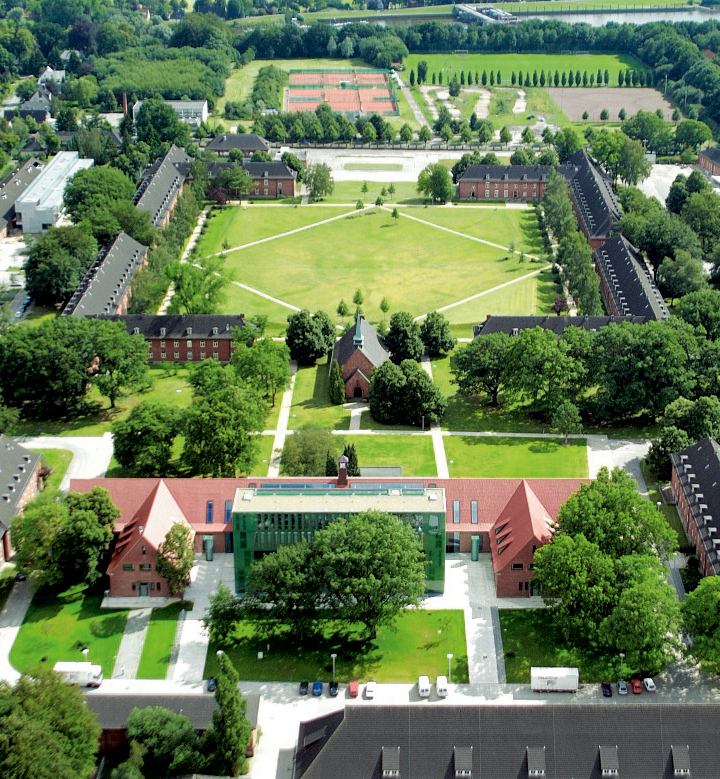
A truly global institution offering world-class, English-taught programs in science, technology, business, and social sciences. Located in Bremen, it unites students from over 110 countries on a vibrant campus where innovation, research, and cultural diversity thrive — preparing graduates to become future-ready leaders in a rapidly changing world.

 Germany

 Level:
Bachelor
Level:
Bachelor
 Language:
English
Language:
English
 Duration:
36 months
Duration:
36 months
 Cost per year:
23,256$
Cost per year:
23,256$
 Next admission:
01 Feb 2027
Next admission:
01 Feb 2027
 Location:
On-campus
Location:
On-campus
 Germany
Level:
Master
Language:
English, German
Duration:
18 months
Cost per year:
11,623$
Next admission:
31 Aug 2027
Location:
Germany
Level:
Master
Language:
English, German
Duration:
18 months
Cost per year:
11,623$
Next admission:
31 Aug 2027
Location:
 Online
Germany
Level:
Master
Language:
English
Duration:
24 months
Cost per year:
23,256$
Next admission:
01 Feb 2027
Location:
On-campus
Online
Germany
Level:
Master
Language:
English
Duration:
24 months
Cost per year:
23,256$
Next admission:
01 Feb 2027
Location:
On-campus
 Germany
Level:
Master
Language:
English
Duration:
24 months
Cost per year:
13,372$
Next admission:
01 Oct 2026
Location:
On-campus
Germany
Level:
Bachelor
Language:
English
Duration:
36 months
Cost per year:
23,256$
Next admission:
01 Feb 2027
Location:
On-campus
Germany
Level:
Bachelor
Language:
German
Duration:
42 months
Cost per year:
6,837$
Next admission:
01 Oct 2026
Location:
On-campus
Germany
Level:
Master
Language:
English
Duration:
24 months
Cost per year:
13,372$
Next admission:
01 Oct 2026
Location:
On-campus
Germany
Level:
Bachelor
Language:
English
Duration:
36 months
Cost per year:
23,256$
Next admission:
01 Feb 2027
Location:
On-campus
Germany
Level:
Bachelor
Language:
German
Duration:
42 months
Cost per year:
6,837$
Next admission:
01 Oct 2026
Location:
On-campus
Please enter your details to connect with a PKHUB Advisor

 Whatsapp