An interdisciplinary program combining engineering, management, and logistics to prepare students for versatile careers in manufacturing, supply chain, project management, and consulting across national and international industries.

An interdisciplinary program combining engineering, management, and logistics to prepare students for versatile careers in manufacturing, supply chain, project management, and consulting across national and international industries.
Programme level
Study duration
Cost per year
Study language
The B.Sc. Industrial Engineering & Management (IEM) program at Constructor University offers a diverse and adaptable approach to engineering that emphasizes the integration of people, materials, and energy in productive ways. The program covers a range of subjects including process engineering, operations research, supply chain management, engineering design, logistics, and project management. Students will gain a comprehensive understanding of management and engineering business functions, preparing them for successful careers in industry. This English-taught Bachelor's program in Industrial Engineering & Management has received high rankings in recent university rankings conducted by the Center for Higher Education (CHE), attesting to its outstanding quality and reputation.
The undergraduate program at Constructor University is a three-year, 180-credit-point program designed to prepare students for a wide range of career paths.
The “4C Model” is the program's backbone, with disciplinary content grouped into three themes according to study years: CHOICE-CORE-CAREER. Additionally, the “CONSTRUCTOR Track”, an integral part of the program, runs parallel throughout the program. It provides students with multidisciplinary content and essential skills such as argumentation, data visualization, societal engagement, and communication.
The curriculum allows students to tailor their education to their goals and to explore different fields of study, with the flexibility to change their major within the first year. Moreover, the programs include a mandatory internship and a study-abroad opportunity in the fifth semester to provide students with hands-on experience and a global perspective.
Year 1
To pursue Industrial Engineering & Management as a major, students take the following mandatory (m) CHOICE modules (30 CP)
Thus, students will learn the fundamentals of industrial engineering, industrial management, manufacturing technology, logistics systems, and supply chains as well as the important business functions in the globalized world.
The remaining CHOICE modules (15 CP) can be selected in the first year of studies according to interest and with the aim to allow a change of major until the beginning of the second year, when the major choice becomes fixed.
Year 2
In their second year, students will take a total of 45 CP from in-depth, discipline-specific CORE modules. These modules aim to extend the students’ critical understanding of the key theories, principles, and methods from both industrial engineering and management.
To pursue IEM as a major, at least the following mandatory CORE modules (30 CP) split in two units need to be taken:
1) “Advanced Industrial Engineering”, consisting of the modules:
This unit takes an in-depth look into production systems, providing the students with understanding of product development and design activities, production planning and control methods, as well as the modeling and simulation of the entire manufacturing processes.
2) “Advanced Industrial Management”, consisting of the modules:
In this unit, students will learn to model decision-making problems, to develop purchasing strategies, to employ advanced lean methods for the elimination of waste in industrial processes, and to manage innovation and technologies.
Students decide to complement their studies by taking the discipline-specific mandatory elective (me) CORE modules (15 CP) from the following unit:
3) “Project & Strategic Management”, consisting of the modules:
or substitute these modules with CORE modules from other study programs according to interest and/or with the aim of pursuing a minor in a second field.
The “Project & Strategic Management” unit prepares students to set up, organize, manage and control projects as well as to evaluate and design strategies in international management.
Year 3
Students prepare and make career decisions after graduation during their third year. They take a mandatory summer internship to explore options fitting individual interests and gain professional experience.
The 5th semester also opens a mobility window for comprehensive study-abroad options. Finally, the 6th semester is dedicated to fostering students' research experience by involving them in an extended Bachelor thesis project.
IEM students must take a total of 15 CP of major-specific or major-related Specialization modules to consolidate their knowledge of the current state of research in areas of their choice.
IEM students can choose 10-15 CP from the following IEM major-specific Specialization Modules:
IEM students can choose a maximum of 5 CP from the following major-related Specialization modules
As part of Constructor University's commitment to student employability, all students are required to participate in a mandatory internship program. The 4-month program-specific internship for the Industrial Engineering & Management (IEM) program, which takes place during the 5th semester, is a crucial component of the curriculum. It provides students with the opportunity to gain real-world experience in a professional setting, allowing them to apply their knowledge and understanding to a professional context, reflect on the relevance of their major to employment and society, and gain professional guidance. This experience can also serve as a stepping stone for their Bachelor's thesis project or future employment after graduation. The program also includes career advising and several career workshops throughout all six semesters to further prepare students for the transition from student life to working life and their future careers. As an alternative, students interested in starting their own company can opt for a startup option, which focuses on developing their business plan and reduces the full-time internship to 8 weeks (15 CP).
The CONSTRUCTOR Track is another important feature of Constructor University’s educational model. The Constructor Track runs orthogonal to the disciplinary CHOICE, CORE, and CAREER modules across all study years and is an integral part of all undergraduate study programs. It provides an intellectual tool kit for lifelong learning and encourages the use of diverse methodologies to approach cross-disciplinary problems. The CONSTRUCTOR track contains Methods, New Skills and German Language and Humanities modules.
Methods
Methods and skills such as mathematics, statistics, programming, data handling, presentation skills, academic writing, and scientific and experimental skills are offered to all students as part of the Methods area in their curriculum. The modules that are specifically assigned to each study programs equip students with transferable academic skills. They convey and practice specific methods that are indispensable for each students’ chosen study program. Students are required to take 20 CP in the Methods area. The size of all Methods modules is 5 CP.
To pursue IEM as a major, the following Methods modules (20 CP) need to be taken as mandatory modules:
New Skills Modules
This part of the curriculum constitutes an intellectual and conceptual tool kit that cultivates the capacity for a particular set of intellectual dispositions including curiosity, imagination, critical thought, and transferability. It nurtures a range of individual and societal capacities, such as self-reflection, argumentation and communication. Finally, it introduces students to the normative aspects of inquiry and research, including the norms governing sourcing, sharing, withholding materials and research results as well as others governing the responsibilities of expertise as well as the professional point of view. Students in this study program are required to take the following modules in their second and third year:
These modules will be offered with two different perspectives of which the students can choose. The module perspectives are independent modules which examine the topic from different point of views. Please see the module description for more details.
German Language and Humanities Modules
German language abilities foster students’ intercultural awareness and enhance their employability in their host country. They are also beneficial for securing mandatory internships (between the 2nd and 3rd year) in German companies and academic institutions. Constructor University supports its students in acquiring basic as well as advanced German skills in the first year of the Constructor Track. Non-native speakers of German are encouraged to take 2 German modules (2.5 CP each), but are not obliged to do so. Native speakers and other students not taking advantage of this offering take alternative modules in Humanities in each of the first two semesters.
Best career perspectives due to a high focus on interdisciplinarity and employability:
Because of the incorporation of management and engineering modules, graduates of the IEM program get a wide spectrum of opportunities in both the professional and academic sectors.
The profile of the B.Sc. Industrial Engineering & Management graduate is of great interest to national and international, medium and large-sized, trade and service industry companies. Graduates especially qualify for tasks in the fields of Logistics, Supply Chain Management (SCM), Procurement, Manufacturing and Automation, Process Optimization, Information Technology (IT), but also for tasks from other engineering and management disciplines.
The career paths that are open for graduates are as versatile as the major’s theme. They range from specializations as experts in the production logistics areas, through project management careers in different fields, to consulting/auditing.
After graduation, students will excel at fulfilling various project responsibilities by applying the gained knowledge in the areas of manufacturing, distribution systems, supply chain management, project management, leadership, entrepreneurship, and team management.
All applicants must show an adequate command of the English language to enroll at Constructor University. An applicant’s English language ability (non-native speakers) may be demonstrated through language proficiency test scores.
You will qualify for an English proficiency waiver if you:
are a native English speaker OR
have been instructed exclusively in English for a minimum of 6 years OR
have scored 600 or higher on the Evidence-Based Reading and Writing section OR
have scored 9 or higher on the ACT Writing section
English Language proficiency tests accepted by Constructor University and the minimum scores/grades:
• TOEFL (Paper-based): Minimum Score: 575
• TOEFL (Internet-based): Minimum Score: 90
• MELAB (Michigan Test): Minimum Score: 80
• IELTS (British Council): Minimum Score: 6.5
• GCSE (British General Certificate of Secondary Education): Minimum Score: A or B
• Cambridge Certificate of Proficiency in English (CPE): Minimum Score: A, B, C and C1 pass
• Cambridge Certificate in Advanced English (CAE): Minimum Score: A, B, C
• Cambridge First Certificate in English (FCE – extended): Minimum Score: A
• International Baccalaureate English A Lit / Lang & Lit: Minimum Score: 6, 7
• SAT Evidence-Based Reading & Writing: Minimum Score: 600
• ACT Writing: Minimum Score: 9
• Duolingo English Test: Minimum Score: 110
• Pearson PTE Academic: Minimum Score: 58
Bremen
Constructor University
BSc Industrial Engineering & Management
Engineering & Applied Sciences, Industrial & Business Engineering
Bachelor
English
IELTS: 6.5
TOEFL: 90
36 months / 6 semesters
01 Feb 2027
| Study mode | Workload | Duration | Cost per year | Total cost |
|---|---|---|---|---|
 On-campus
|
Full-time | 36 months | 23,256$ | 69,767$ |

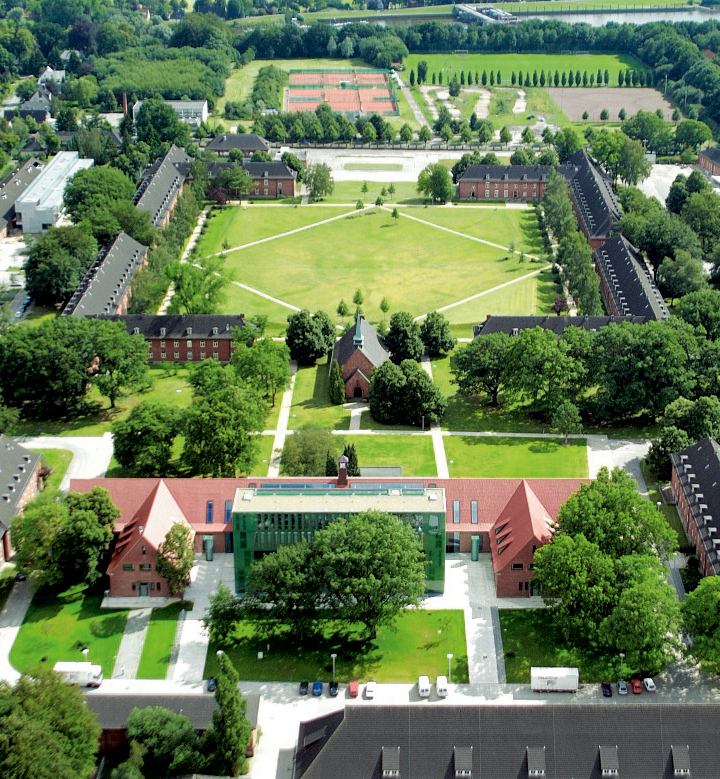
A truly global institution offering world-class, English-taught programs in science, technology, business, and social sciences. Located in Bremen, it unites students from over 110 countries on a vibrant campus where innovation, research, and cultural diversity thrive — preparing graduates to become future-ready leaders in a rapidly changing world.

 Germany

 Level:
Bachelor
Level:
Bachelor
 Language:
English
Language:
English
 Duration:
42 months
Duration:
42 months
 Cost per year:
11,860$
Cost per year:
11,860$
 Next admission:
01 Oct 2026
Next admission:
01 Oct 2026
 Location:
On-campus
Location:
On-campus
 Germany
Level:
Bachelor
Language:
English
Duration:
36 months
Cost per year:
23,256$
Next admission:
01 Feb 2027
Location:
On-campus
Germany
Level:
Bachelor
Language:
English
Duration:
42 months
Cost per year:
13,140$
Next admission:
01 Oct 2026
Location:
On-campus
Germany
Level:
Master
Language:
English
Duration:
24 months
Cost per year:
16,163$
Next admission:
01 Oct 2026
Location:
On-campus
Germany
Level:
Master
Language:
English
Duration:
24 months
Cost per year:
16,163$
Next admission:
01 Oct 2026
Location:
On-campus
Germany
Level:
Bachelor
Language:
English
Duration:
42 months
Cost per year:
11,860$
Next admission:
01 Oct 2026
Location:
On-campus
Germany
Level:
Bachelor
Language:
English
Duration:
36 months
Cost per year:
23,256$
Next admission:
01 Feb 2027
Location:
On-campus
Germany
Level:
Bachelor
Language:
English
Duration:
42 months
Cost per year:
13,140$
Next admission:
01 Oct 2026
Location:
On-campus
Germany
Level:
Master
Language:
English
Duration:
24 months
Cost per year:
16,163$
Next admission:
01 Oct 2026
Location:
On-campus
Germany
Level:
Master
Language:
English
Duration:
24 months
Cost per year:
16,163$
Next admission:
01 Oct 2026
Location:
On-campus
Germany
Level:
Bachelor
Language:
English
Duration:
42 months
Cost per year:
11,860$
Next admission:
01 Oct 2026
Location:
On-campus
Please enter your details to connect with a PKHUB Advisor
 Whatsapp