A future-focused program in embedded systems and digital signal processing that equips you with versatile engineering skills and excellent career prospects in Germany and worldwide, supported by strong industry and research placements.

A future-focused program in embedded systems and digital signal processing that equips you with versatile engineering skills and excellent career prospects in Germany and worldwide, supported by strong industry and research placements.
Programme level
Study duration
Cost per year
Study language
Over recent decades, extensive developments in microelectronics have triggered a digital revolution where computers take center stage. While we still think of a computer as a desktop or a laptop, digital computing and digital signal processing have become vital for many of the products in our everyday life, such as cars, mobile phones, tablets, cameras, household appliances, and more. The Electrical and Computer Engineering (ECE) program focuses on communications and digital signal processing, including the enabling digital processing elements and their programming. Those enabling technologies are mostly subsumed under the headline of embedded systems.
The undergraduate program at Constructor University is a three-year, 180-credit-point program designed to prepare students for a wide range of career paths.
The “4C Model” is the program's backbone, with disciplinary content grouped into three themes according to study years: CHOICE-CORE-CAREER. Additionally, the “CONSTRUCTOR Track”, an integral part of the program, runs parallel throughout the program. It provides students with multidisciplinary content and essential skills such as argumentation, data visualization, societal engagement, and communication.
The curriculum allows students to tailor their education to their goals and to explore different fields of study, with the flexibility to change their major within the first year. Moreover, the programs include a mandatory internship and a study-abroad opportunity in the fifth semester to provide students with hands-on experience and a global perspective.
Year 1
The first study year is characterized by a university-specific offering of disciplinary education that builds on and expands upon the students’ entrance qualifications. Students select introductory modules for a total of 45 CP from the CHOICE area of a variety of study programs, of which 15-45 CP will belong to their intended major.
To pursue ECE as a major, the following CHOICE modules (45 CP) need to be taken as mandatory modules:
Year 2
In their second year, students take a total of 45 CP from a selection of in-depth, discipline-specific CORE modules. Building on the introductory CHOICE modules and applying the methods and skills acquired so far, these modules aim to expand the students’ critical understanding of the key theories, principles, and methods in their major for the current state of knowledge and best practice.
ECE students take the following mandatory CORE modules:
Since Electrical and Computer Engineering has a strongly sequential structure where course contents build onto each other, ECE students will not have the option of a minor in another study program within the 180 CP required for the Bachelor’s degree.
Year 3
Students prepare and make career decisions after graduation during their third year. They take a mandatory summer internship to explore options fitting individual interests and gain professional experience.
The 5th semester also opens a mobility window for comprehensive study-abroad options. Finally, the 6th semester is dedicated to fostering students' research experience by involving them in an extended Bachelor thesis project.
To pursue ECE as a major, at least 10 CP from the following mandatory major-specific Specialization Modules need to be taken:
A maximum of 5 CP can be taken from major-related modules instead of major-specific Specialization Modules:
As part of Constructor University's commitment to student employability, all students are required to participate in a mandatory two-month internship of 15 CP that will usually be completed during the summer between the second and third year of study. It provides students with the opportunity to gain real-world experience in a professional setting, allowing them to apply their knowledge and understanding to a professional context, reflect on the relevance of their major to employment and society, and gain professional guidance. As an alternative to the full-time internship, students interested in setting up their own company can apply for a start-up option to focus on the development of their business plan.
The CONSTRUCTOR Track is another important feature of Constructor University’s educational model. The Constructor Track runs orthogonal to the disciplinary CHOICE, CORE, and CAREER modules across all study years and is an integral part of all undergraduate study programs. It provides an intellectual tool kit for lifelong learning and encourages the use of diverse methodologies to approach cross-disciplinary problems. The CONSTRUCTOR track contains Methods, New Skills and German Language and Humanities modules.
Methods
Methods and skills such as mathematics, statistics, programming, data handling, presentation skills, academic writing, and scientific and experimental skills are offered to all students as part of the Methods area in their curriculum. The modules that are specifically assigned to each study programs equip students with transferable academic skills. They convey and practice specific methods that are indispensable for each students’ chosen study program. Students are required to take 20 CP in the Methods area. The size of all Methods modules is 5 CP.
To pursue ECE as a major, the following Methods modules (20 CP) need to be taken as mandatory modules:
New Skills Modules
This part of the curriculum constitutes an intellectual and conceptual tool kit that cultivates the capacity for a particular set of intellectual dispositions including curiosity, imagination, critical thought, and transferability. It nurtures a range of individual and societal capacities, such as self-reflection, argumentation and communication. Finally, it introduces students to the normative aspects of inquiry and research, including the norms governing sourcing, sharing, withholding materials and research results as well as others governing the responsibilities of expertise as well as the professional point of view. Students in this study program are required to take the following modules in their second and third year:
Furthermore, they must choose either
as well one of the following modules:
German Language and Humanities Modules
German language abilities foster students’ intercultural awareness and enhance their employability in their host country. They are also beneficial for securing mandatory internships (between the 2nd and 3rd year) in German companies and academic institutions. Constructor University supports its students in acquiring basic as well as advanced German skills in the first year of the Constructor Track. Non-native speakers of German are encouraged to take 2 German modules (2.5 CP each), but are not obliged to do so. Native speakers and other students not taking advantage of this offering take alternative modules in Humanities in each of the first two semesters.
High demand for EE and ECE engineers with excellent job and career options in Germany and worldwide: A recent survey by a German engineering association showed high demand for Electrical Engineering and Electrical and Computer Engineering engineers. Currently, inside Germany alone, there are twice as many positions than graduates, hence, ample job opportunities.
Highly qualified Constructor University graduates with best employment perspectives:
Higher demands for ECE engineers are to be expected. This is partly due to general economic trends but especially related to unusually low student numbers in recent years. Especially, due to rapid developments, fundamental principles and cross-boundary knowledge become increasingly important. In addition, the required qualification profiles and personal attitudes differ for academic versus industrial careers. The ECE program at Constructor University responds to all of these conditions for a successful career through the flexibility of the program and the trans-disciplinary education. Constructor University ECE graduates start their careers in very diverse companies, successfully continue at renowned universities, or stay with Constructor University for graduate education or a PhD.
Our graduating students start their career paths in the leading companies or researchcenters:
Career paths after graduation are very diverse. Constructor ECE alumni work in the aerospace industry, telecommunications, the automotive and energy sector, and in the field of information technology, in academia, at research centers, in management, and in consultancy, even in finance. Having checked exemplary career paths of 75 former Constructor ECE students, we found an enormous manifold of companies, research centers, and universities, where our alumni went or are currently working. It starts from well-known big companies, like Bosch, Continental, Deutsche Telekom, E.on, Ericsson, Google, Infineon, Intel, Nokia Bell Labs, Texas Instruments, Volkswagen, midsize ones, like Kapsch, Hirschmann, OHB, Rohde & Schwartz, to numerous small ones and start-ups like DSI, Snips, to consulting companies like McKinsey, Business Technology Consulting, Deloitte, financial institutions like PricewaterhouseCoopers, OpenLink Financial, even to companies like Fresenius and Proctor and Gamble, that would not come to mind immediately as typical workplaces for ECE graduates. Interestingly, also after intermediate further education steps or employments in other countries, a high percentage of alumni have found their long-term home in Germany and also Bremen.
All applicants must show an adequate command of the English language to enroll at Constructor University. An applicant’s English language ability (non-native speakers) may be demonstrated through language proficiency test scores.
You will qualify for an English proficiency waiver if you:
are a native English speaker OR
have been instructed exclusively in English for a minimum of 6 years OR
have scored 600 or higher on the Evidence-Based Reading and Writing section OR
have scored 9 or higher on the ACT Writing section
English Language proficiency tests accepted by Constructor University and the minimum scores/grades:
• TOEFL (Paper-based): Minimum Score: 575
• TOEFL (Internet-based): Minimum Score: 90
• MELAB (Michigan Test): Minimum Score: 80
• IELTS (British Council): Minimum Score: 6.5
• GCSE (British General Certificate of Secondary Education): Minimum Score: A or B
• Cambridge Certificate of Proficiency in English (CPE): Minimum Score: A, B, C and C1 pass
• Cambridge Certificate in Advanced English (CAE): Minimum Score: A, B, C
• Cambridge First Certificate in English (FCE – extended): Minimum Score: A
• International Baccalaureate English A Lit / Lang & Lit: Minimum Score: 6, 7
• SAT Evidence-Based Reading & Writing: Minimum Score: 600
• ACT Writing: Minimum Score: 9
• Duolingo English Test: Minimum Score: 110
• Pearson PTE Academic: Minimum Score: 58
Bremen
Constructor University
BSc Electrical and Computer Engineering
Engineering & Applied Sciences, Mechanical & Electrical Engineering
Bachelor
English
IELTS: 6.5
TOEFL: 90
36 months / 6 semesters
01 Feb 2027
| Study mode | Workload | Duration | Cost per year | Total cost |
|---|---|---|---|---|
 On-campus
|
Full-time | 36 months | 23,256$ | 69,767$ |

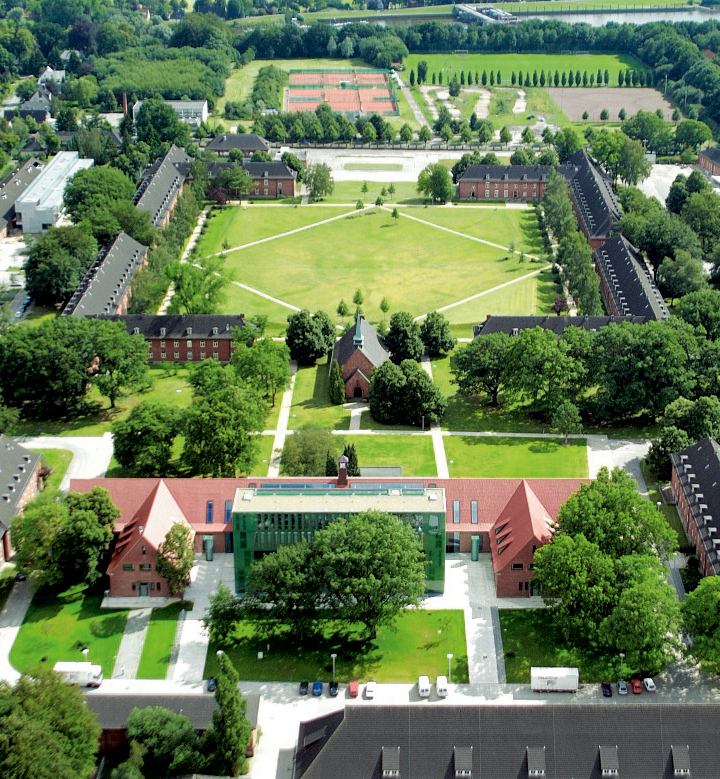
A truly global institution offering world-class, English-taught programs in science, technology, business, and social sciences. Located in Bremen, it unites students from over 110 countries on a vibrant campus where innovation, research, and cultural diversity thrive — preparing graduates to become future-ready leaders in a rapidly changing world.

 Germany

 Level:
Bachelor
Level:
Bachelor
 Language:
English
Language:
English
 Duration:
42 months
Duration:
42 months
 Cost per year:
11,860$
Cost per year:
11,860$
 Next admission:
01 Oct 2026
Next admission:
01 Oct 2026
 Location:
On-campus
Location:
On-campus
 Germany
Level:
Bachelor
Language:
English
Duration:
36 months
Cost per year:
23,256$
Next admission:
01 Feb 2027
Location:
On-campus
Germany
Level:
Bachelor
Language:
English
Duration:
42 months
Cost per year:
13,140$
Next admission:
01 Oct 2026
Location:
On-campus
Germany
Level:
Master
Language:
English
Duration:
24 months
Cost per year:
16,163$
Next admission:
01 Oct 2026
Location:
On-campus
Germany
Level:
Master
Language:
English
Duration:
24 months
Cost per year:
16,163$
Next admission:
01 Oct 2026
Location:
On-campus
Germany
Level:
Bachelor
Language:
English
Duration:
42 months
Cost per year:
11,860$
Next admission:
01 Oct 2026
Location:
On-campus
Germany
Level:
Bachelor
Language:
English
Duration:
36 months
Cost per year:
23,256$
Next admission:
01 Feb 2027
Location:
On-campus
Germany
Level:
Bachelor
Language:
English
Duration:
42 months
Cost per year:
13,140$
Next admission:
01 Oct 2026
Location:
On-campus
Germany
Level:
Master
Language:
English
Duration:
24 months
Cost per year:
16,163$
Next admission:
01 Oct 2026
Location:
On-campus
Germany
Level:
Master
Language:
English
Duration:
24 months
Cost per year:
16,163$
Next admission:
01 Oct 2026
Location:
On-campus
Germany
Level:
Bachelor
Language:
English
Duration:
42 months
Cost per year:
11,860$
Next admission:
01 Oct 2026
Location:
On-campus
Please enter your details to connect with a PKHUB Advisor
 Whatsapp