Apply Advanced Data Science Methods to Solve Complex Business and Societal Challenges, Transform Digital Data into Actionable Insights, and Drive Evidence-Based Decision-Making Across Industries and Public Institutions.

Apply Advanced Data Science Methods to Solve Complex Business and Societal Challenges, Transform Digital Data into Actionable Insights, and Drive Evidence-Based Decision-Making Across Industries and Public Institutions.
Programme level
Study duration
Cost per year
Study language
The aim of this 2-year Data Science for Society and Business (DSSB) (online) MSc program is two-fold. On the one hand, it aims to use rapidly growing digital data resources and new computational tools and methods to describe, model, predict, and potentially solve pressing business, ecological, economic, organizational, political, or other social problems and significant trends like innovation diffusion, migration flows, susceptibility to infections, sustainable growth, political mobilization, and the likes. On the other hand, the program addresses the rising demand for social data science expertise and critical skills in new industries (i.e., social media, start-ups), in established sectors (i.e., production, civil and private services), typical job specifications (i.e., consulting, market research, marketing), public administration (i.e., health, security), and academia (all sciences).
Degree and ECTS points: Master of Science, 120 ECTS
Digital innovations are rapidly conquering all areas of social and economic life. Today, modern societies can hardly function without social media, search engines, communication and e-commerce platforms, and individualized online offers. In less than a decade, these multi-purpose technologies have become the core components of an economy and other social sectors.
External shocks such as the COVID-19 pandemic have pushed digitalization toward another leap. Home-Office solutions, digital learning, online conferencing, telemedicine, cybersecurity and other digital services have become an essential part of our private, professional, and public life in no time. Meanwhile, we are permanently adding to the surging data stockpile gathered and harvested by the IT services.
Research institutions, private firms, public administration, political parties, NGOs and other—including criminal—actors are already using and will continue to use “big” data to better understand, predict, and effectively intervene in issues of crucial interest to contemporary and future societies.
Data may become the “new oil of the 21st century,” as predicted by British mathematician Clive Humby in 2006. The second part of his famous quote is already true: Data “is valuable, but if unrefined, it cannot really be used.”
Data science is currently one of the hottest fields in the job market, and combines concepts and techniques from various fields, in particular computer science and statistics. This module combines the mathematical and statistical foundations with the major algorithmic concepts of data science. The module introduces the fundamental principles of linear algebra for data analysis and gives special attention to dimension reduction techniques and other data projection algorithms. It covers the fundamental probability concepts needed for assessing and evaluating modeling results and predictions, and proceeds to discuss complexity issues for data science projects.
The second part of the module overviews supervised and unsupervised learning techniques. This module aims at providing the fundamental knowledge in mathematics and statistics necessary for understanding the practical application of data science algorithms and evaluating their performance. It also provides an overview of the fundamental concepts along with the main questions and approaches in data science. Students will learn how to address societal and business-related issues based on practically relevant questions, digital data, and their learned programming and analytical skills from synchronized methods modules.
At the end of the 2-year online program, students will have acquired a strong body of expertise, both in content and in computational skills, to solve challenging problems in digital societies thoughtfully and responsibly.
The DSSB (online) MSc program is composed of foundational lectures, specialized modules, tutorials, and asynchronous activities. These lead to a master thesis that can be conducted in close collaboration with research, institutional, or industry partners. The program takes four semesters (two years). The following table provides an overview of the program’s modular structure.
The program is partitioned into three areas (core, methods and foundation) and the master thesis. All credit points (CP) are based on ECTS. Students need to obtain a total of 120 CP to graduate. The default module size is 7.5 CP, with smaller 2.5 CP modules being possible as justified exceptions, e.g., if the learning goals are more suitable for 2.5 CP and the overall student workload is balanced.
Online Teaching
Constructor University online study programs focus on the holistic learning success of students and offer a variety of synchronous and asynchronous formats that align with problem- and project-based learning.
The online master program in DSSB applies proven and effective teaching and learning modalities that engage distance learners and support a vibrant learning community. This means that students participate in online courses with predominantly asynchronous lectures and learning activities that are complemented by synchronous tutorials and hands-on sessions.
Students are guided and supported by faculty as well as experienced tutors and lecturers to transfer acquired knowledge into practice. The hands-on elements include dedicated collaboration with other students using tools and concepts that enable distributed work from different places and different time-zones.
Students enrolled in online study programs will find their course materials such as videos, case studies, scholarly articles, websites, podcasts, online games etc. on a Learning Management Software (LMS) platform provided by Constructor University.
Data scientists with a focus on business and social sciences face manifold career options. The demand for their expertise is significant and growing. They can work not only in tech and for social or consulting firms but also for NGOs and international organizations; in retail, e-commerce, and telecommunication; in the finance sector; in the automotive and health industries; for public administration; and in academia. Companies and institutions in almost every domain need:
The employability of DSSB graduates is promoted by sharing contacts with industry, public institutions, non-governmental organizations, and research institutes throughout the curriculum. In the fourth semester, participation in additional public big data challenges is organized as an elective in the curriculum.
The DSSB (online) graduate program is a highly selective program for students of all age groups with a strong background in the social sciences, such as anthropology, business, economics, demography, management science, media science, political science, psychology, social history, or sociology, who want to become a data scientist and are interested in business and social science research questions.
However, we are also open to ambitious learners from humanities such as history or linguistics, natural sciences such as cognitive or health sciences, or other areas with a quantitative orientation. Students must be interested in working in interdisciplinary, international, and innovative research fields. The program prepares for a professional and academic career.
Admission to Constructor University is selective and based on a candidate’s university achievements, recommendations, and self-presentation. Students admitted to Constructor University demonstrate exceptional academic achievements, intellectual creativity, and the desire and motivation to make a difference in the world.
The following documents need to be submitted with the application:
Students are guided through their studies via the state-of-the-art Learning Management System (LMS) provided by Constructor, leveraging an active approach to knowledge discovery.
Tutors and lecturers support our students in their learning through virtual study groups, peer evaluation, and mentoring. This is an online program with optional blended elements such as internships at our partner institutions to gain professional experience.
All applicants must show an adequate command of the English language to enroll at Constructor University. An applicant’s English language ability (non-native speakers) may be demonstrated through language proficiency test scores.
You will qualify for an English proficiency waiver if you:
are a native English speaker OR
have been instructed exclusively in English for a minimum of 6 years OR
have scored 600 or higher on the Evidence-Based Reading and Writing section OR
have scored 9 or higher on the ACT Writing section
English Language proficiency tests accepted by Constructor University and the minimum scores/grades:
• TOEFL (Paper-based): Minimum Score: 575
• TOEFL (Internet-based): Minimum Score: 90
• MELAB (Michigan Test): Minimum Score: 80
• IELTS (British Council): Minimum Score: 6.5
• GCSE (British General Certificate of Secondary Education): Minimum Score: A or B
• Cambridge Certificate of Proficiency in English (CPE): Minimum Score: A, B, C and C1 pass
• Cambridge Certificate in Advanced English (CAE): Minimum Score: A, B, C
• Cambridge First Certificate in English (FCE – extended): Minimum Score: A
• International Baccalaureate English A Lit / Lang & Lit: Minimum Score: 6, 7
• SAT Evidence-Based Reading & Writing: Minimum Score: 600
• ACT Writing: Minimum Score: 9
• Duolingo English Test: Minimum Score: 110
• Pearson PTE Academic: Minimum Score: 58
Bremen
Constructor University
Master in Data Science for Society and Business
Computer Science, Artificial Intelligence & Data Science
Master
English
IELTS: 6.5
TOEFL: 90
24 months / 4 semesters
14 Aug 2026
| Study mode | Workload | Duration | Cost per year | Total cost |
|---|---|---|---|---|
 Online
|
Full-time | 24 months | 5,814$ | 11,628$ |

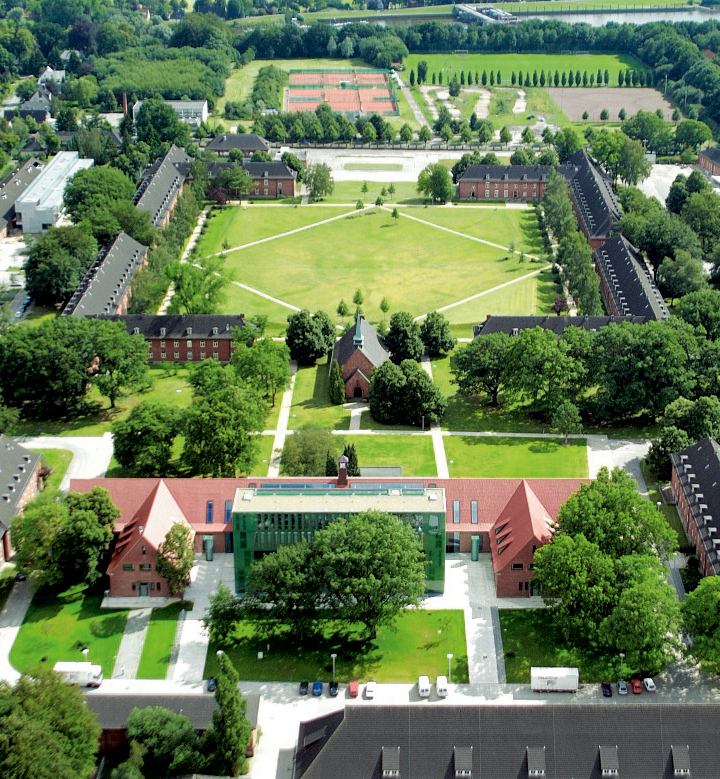
A truly global institution offering world-class, English-taught programs in science, technology, business, and social sciences. Located in Bremen, it unites students from over 110 countries on a vibrant campus where innovation, research, and cultural diversity thrive — preparing graduates to become future-ready leaders in a rapidly changing world.
 Germany

 Level:
Master
Level:
Master
 Language:
English
Language:
English
 Duration:
18 months
Duration:
18 months
 Cost per year:
11,182$
Cost per year:
11,182$
 Next admission:
01 Oct 2026
Next admission:
01 Oct 2026
 Location:
 On-campus
 Germany
Level:
Master
Language:
English
Duration:
24 months
Cost per year:
13,837$
Next admission:
01 Oct 2026
Location:
On-campus
Germany
Level:
Master
Language:
English
Duration:
24 months
Cost per year:
13,837$
Next admission:
01 Oct 2026
Location:
On-campus
 Germany
Level:
Master
Language:
English
Duration:
24 months
Cost per year:
23,256$
Next admission:
01 Feb 2027
Location:
On-campus
Germany
Level:
Master
Language:
English
Duration:
24 months
Cost per year:
23,256$
Next admission:
01 Feb 2027
Location:
On-campus
Germany
Level:
Master
Language:
English
Duration:
24 months
Cost per year:
5,814$
Next admission:
14 Aug 2026
Location:
Online
Germany
Level:
Master
Language:
English
Duration:
18 months
Cost per year:
11,182$
Next admission:
01 Oct 2026
Location:
On-campus
Germany
Level:
Master
Language:
English
Duration:
24 months
Cost per year:
23,256$
Next admission:
01 Feb 2027
Location:
On-campus
Germany
Level:
Master
Language:
English
Duration:
24 months
Cost per year:
23,256$
Next admission:
01 Feb 2027
Location:
On-campus
Germany
Level:
Master
Language:
English
Duration:
24 months
Cost per year:
5,814$
Next admission:
14 Aug 2026
Location:
Online
Germany
Level:
Master
Language:
English
Duration:
18 months
Cost per year:
11,182$
Next admission:
01 Oct 2026
Location:
On-campus
Please enter your details to connect with a PKHUB Advisor
 Whatsapp