Programme level
Study duration
Cost per year
Study language
The Supply Chain Management (SCM) master's program at Constructor University educates students to manage global logistics systems using data analytics, engineering, and management skills. Emphasizing data-driven decision-making, modern leadership, change management, and intercultural competence, the program prepares students to build and sustain high-performance logistics systems in a global context.
It is designed for students with a completed first degree or equivalent training in logistics, economics, engineering, or information technology, as well as those with a strong interest and demonstrated affinity for the field. The program builds on the university’s Industrial Engineering & Management bachelor's degree, offering deeper immersion in supply chain and leadership topics.
The demand for leaders capable of dealing with challenges related to highly interconnected and digitalized supply chains will further increase in the future.
Constructor University’s program Supply Chain Management (SCM) aims to satisfy this demand through a holistic educational approach focusing on interdisciplinary and practical knowledge that prepares its students for the complex challenges facing both industry and logistics research. It does so by encompassing the initially mentioned core challenges in different ways and appropriately roots them into various modules of the curriculum.
What makes Constructor University SCM program so attractive is its strong focus on data analytics and data engineering. In an increasingly interconnected and digitalized world, a vast amount of data is gathered along supply chains that need to be processed, analyzed and made accessible to decision-makers. Specially tailored modules in data analytics and programming equip our students with these skills, which are in high demand across industries.
A highly interdisciplinary program: Admitting students from different disciplines from different prestigious universities worldwide, the program aligns student's knowledge on SCM in the first semester and builds on this with specialist modules in the next semester. From the third semester, independent research and application becomes more prominent, which eventually results in preparing a master’s thesis on a challenging topic.
The program is application-oriented in its nature. This is reflected in the modules by aligning the contents with real-world issues, integrating practitioners from successful companies of various industries, collaborating with companies in terms of case studies, and field trips. With regard to content, the program focuses on companies´ needs in today’s world and takes into account external company structures. It explores supplier relationships as well as the management of relevant company networks.
Soft skills and personal competence development for best employability: Apart from professional qualifications, the development of social competence is necessary for a successful career in the field of SCM. Therefore, a core emphasis of the program is placed upon supporting the participants’ personal development in terms of soft skills and language skills. To account for the diversity in the student body and their tendency to work in Germany, we train students in (German) language proficiency and convey country-specific information to give them the best preparation for the national as well as the international job market.
Experience-based learning and intense student-teacher communication: The study program chair believes in the efficiency of experience-based learning. Hence, faculty, lecturers, and tutors intensively use case studies, business games and simulations as active teaching methods. Furthermore, students learn and work successfully in interdisciplinary and intercultural teams. Intensive communication and discussion between lecturers and participants are central elements of the program. The personal support of each student by an assigned Academic Advisor as well as regular meetings with the program chair fosters the successful completion of the program despite different learning rates and entry knowledge levels.
The Supply Chain Management curriculum is divided into four semesters and takes two years to complete. Each semester is composed of a mixture of core, research & discovery, math & methods, and career modules, leading to a master’s thesis that may be conducted in collaboration with an industry partner.
The first semester is a foundational semester in which students from different educational and cultural backgrounds get acquainted with general methods and knowledge about supply chain and logistics as well as data analytics, programming, language and soft skills that is essential for the further development of their studies. In the second semester, there is a strong focus on the different facets of supply chains, such as design, purchasing, distribution, etc. In the third semester, emphasis is put on introducing students to complex tasks in science and industry. Here, they can combine modules that best fit their abilities and interests. Students are expected to demonstrate their capabilities to self-organize the preparation of solutions for current theoretical and practical scientific problems of an industrial partner. During the fourth and final semester students work on their master’s thesis.
The modules are grouped into five areas as outlined in the Schematic Study Plan. In the third semester, students have to choose 3 mandatory elective modules (out of 4 modules in the core area).
The areas are:
Core Area: 45 CP
Research & Discovery Area: 15 CP
Math & Methods Area: 15 CP
Career Area: 15 CP
Master Thesis: 30 CP
All applicants must show an adequate command of the English language to enroll at Constructor University. An applicant’s English language ability (non-native speakers) may be demonstrated through language proficiency test scores.
You will qualify for an English proficiency waiver if you:
are a native English speaker OR
have been instructed exclusively in English for a minimum of 6 years OR
have scored 600 or higher on the Evidence-Based Reading and Writing section OR
have scored 9 or higher on the ACT Writing section
English Language proficiency tests accepted by Constructor University and the minimum scores/grades:
• TOEFL (Paper-based): Minimum Score: 575
• TOEFL (Internet-based): Minimum Score: 90
• MELAB (Michigan Test): Minimum Score: 80
• IELTS (British Council): Minimum Score: 6.5
• GCSE (British General Certificate of Secondary Education): Minimum Score: A or B
• Cambridge Certificate of Proficiency in English (CPE): Minimum Score: A, B, C and C1 pass
• Cambridge Certificate in Advanced English (CAE): Minimum Score: A, B, C
• Cambridge First Certificate in English (FCE – extended): Minimum Score: A
• International Baccalaureate English A Lit / Lang & Lit: Minimum Score: 6, 7
• SAT Evidence-Based Reading & Writing: Minimum Score: 600
• ACT Writing: Minimum Score: 9
• Duolingo English Test: Minimum Score: 110
• Pearson PTE Academic: Minimum Score: 58
Bremen
Constructor University
Master in Supply Chain Management
Business & Management, Logistics & Supply Chain Management
Master
English
IELTS: 6.5
TOEFL: 90
24 months / 4 semesters
01 Feb 2027
| Study mode | Workload | Duration | Cost per year | Total cost |
|---|---|---|---|---|
 On-campus
|
Full-time | 24 months | 23,256$ | 46,512$ |

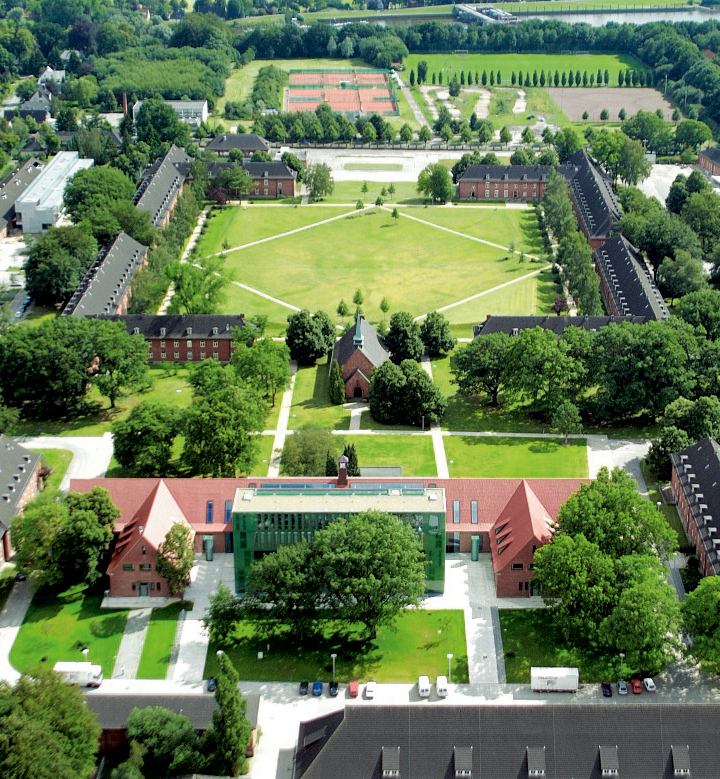
A truly global institution offering world-class, English-taught programs in science, technology, business, and social sciences. Located in Bremen, it unites students from over 110 countries on a vibrant campus where innovation, research, and cultural diversity thrive — preparing graduates to become future-ready leaders in a rapidly changing world.
 Germany

 Level:
Master
Level:
Master
 Language:
English
Language:
English
 Duration:
18 months
Duration:
18 months
 Cost per year:
11,182$
Cost per year:
11,182$
 Next admission:
01 Feb 2027
Next admission:
01 Feb 2027
 Location:
On-campus
Location:
On-campus
 Germany
Level:
Bachelor
Language:
English
Duration:
36 months
Cost per year:
10,465$
Next admission:
01 Oct 2026
Location:
On-campus
Germany
Level:
Bachelor
Language:
English
Duration:
36 months
Cost per year:
10,465$
Next admission:
01 Oct 2026
Location:
On-campus
 Germany
Level:
Master
Language:
English
Duration:
24 months
Cost per year:
15,070$
Next admission:
01 Oct 2026
Location:
On-campus
Germany
Level:
Master
Language:
English
Duration:
24 months
Cost per year:
15,814$
Next admission:
01 Oct 2026
Location:
On-campus
Germany
Level:
Master
Language:
English
Duration:
24 months
Cost per year:
16,163$
Next admission:
01 Oct 2026
Location:
On-campus
Germany
Level:
Master
Language:
English
Duration:
24 months
Cost per year:
11,860$
Next admission:
01 Oct 2026
Location:
On-campus
Germany
Level:
Master
Language:
English
Duration:
24 months
Cost per year:
15,070$
Next admission:
01 Oct 2026
Location:
On-campus
Germany
Level:
Master
Language:
English
Duration:
24 months
Cost per year:
15,814$
Next admission:
01 Oct 2026
Location:
On-campus
Germany
Level:
Master
Language:
English
Duration:
24 months
Cost per year:
16,163$
Next admission:
01 Oct 2026
Location:
On-campus
Germany
Level:
Master
Language:
English
Duration:
24 months
Cost per year:
11,860$
Next admission:
01 Oct 2026
Location:
On-campus
Please enter your details to connect with a PKHUB Advisor

 Whatsapp